This is Behind the Blog, where we share our behind-the-scenes thoughts about how a few of our top stories of the week came together. This week, we discuss viewing terrible images online and giving out zines at a benefit show.
EMANUEL: I’ve seen a lot of terrible videos in my years online but by far the most upsetting type of video shows police using excessive force and especially videos of police killing people. There are more graphic videos from battlefields and other dark corners of the internet but what happened to Renee Nicole Good this week could happen to anyone living in America, and when I imagine the tragedy that has been visited on her loved ones I can’t help but imagine how easily I or anyone I care about can find ourselves in the same situation.
I think everyone who sits down to watch these videos does this as well, but as reporters our job is often to go frame by frame and analyze what exactly happened, which only highlights how brutally, quickly, and unnecessarily law enforcement can kill someone. Bellingcat has a good video on that if you’re interested. Reporting on these videos fairly also requires us to look at the video and credulously see if and how it matches claims made by law enforcement, and in this case the White House as well, that the shooting was justified, that the officer was acting in self-defense, that despite the horror we all immediately feel because it is a normal human reaction to seeing someone die, that we entertain the idea that this was the best choice the officer could have made.
There’s also a difference between what any reasonable human being would consider “justified,” and what law enforcement can legally qualify as justified in court. As I was telling Joe when he was writing his story about this shooting Wednesday, I 100 percent agree with him that the DHS is lying to us about what happened, and at the same time, given our legal system, the current administration, and our history with police shootings generally, I wouldn’t at all be surprised of those lies could be laundered in court and the officer will never pay a price.
 Joseph Cox
Which is why I appreciate him writing the story so much. The morning after the shooting I listened to NPR in the car and heard them frame what happened as an argument. The mayor claimed it was unnecessary, DHS claimed it was self-defense, and this was the framing across most of the big news publications. I completely understand that these publications want to seem impartial and strive for objectivity, which are totally good goals, but this is exactly what we mean when we talk about how the “view from nowhere” can actually undermine the truth.
It’s our job to look at the details but it’s also important not to get lost in them. We can recognize that a situation is complicated, that videos can be deceiving, and that the law doesn’t always meet our expectations for justice, but we can also see what is painfully obvious: The administration has deployed masked, armed thugs to terrorize communities across the country with no accountability, and what happened to Good is an inevitable outcome of those policies.
JOSEPH: I’ll preface straight away that this is just some off-the-top-of-my-head thoughts. I wouldn’t publish this to the wider internet, at least not yet and not before I’ve done some additional reporting and research. But I feel fine jotting it down for paid subscribers because I know people who read Behind the Blog engage with our articles more closely and carefully than randos on social media.
After we published Inside ICE’s Tool to Monitor Phones in Entire Neighborhoods, there were a lot of people in my Bluesky mentions telling one another how to thwart this sort of surveillance. Some information was fine. Other parts were flat out wrong. When I saw people in my mentions spreading straight up bullshit based on my article, I blocked them. I don’t want people reading (well, they’re not reading) my work then spreading dangerous misconceptions about it. Go away.
So I wanted to clarify some things, to correct some misunderstandings and provide more information about the topic and tool we covered.
Some people said this data came from telecoms. No, it doesn’t. As the article says, it most likely comes from ordinary apps installed on your phone selling this data to a location data broker or being co-opted by a company in the online ad business. It’s not from the telecoms like AT&T, Verizon, and T-Mobile. So, anything about ‘the tool is triangulating your position with celltowers’ is wrong. It is absolutely not rare for location data companies to get information from sources that aren’t the telecoms. In fact, it is the much, much more common route. It’s dizzying how many of these companies there are and how many feed into one another.
If the collection is via SDK, that’s going to mean it’s about what apps are installed on your phone. It’s going to be about that weird ass storm following app you downloaded five years ago and never opened again.
 Joseph Cox
If the collection is via RTB, it’s going to be the advertising process inside the apps on your phone, and that means it’s likely not just obscure apps, but some massively popular ones. When Gravy Analytics got hacked (Gravy is the parent company of Venntel, which used to sell location data to ICE), we built a list of apps that were linked to coordinates of phones inside the U.S. and around the world. At the time I wrote this:
The list includes dating sites Tinder and Grindr; massive games such as Candy Crush, Temple Run, Subway Surfers, and Harry Potter: Puzzles & Spells; transit app Moovit; My Period Calendar & Tracker, a period tracking app with more than 10 million downloads; popular fitness app MyFitnessPal; social network Tumblr; Yahoo’s email client; Microsoft’s 365 office app; and flight tracker Flightradar24. The list also mentions multiple religious-focused apps such as Muslim prayer and Christian Bible apps; various pregnancy trackers; and many VPN apps, which some users may download, ironically, in an attempt to protect their privacy.
We uploaded the list here.
I think it’s more likely Webloc is getting its data from RTB than SDK. It’s been a while since I’ve seen a location data company connected to government contractors or agencies using an SDK. When we covered Patternz it was explicitly collecting data through RTB.
Now, would an adblocker at the browser level, or a virtual private network that blocks connections to ad networks, stop this sort of data being collected? Maybe, I don’t know 100%.
What likely would stop both is turning off location services on your phone at the operating system level. Unless the app is doing some insane fuckery—and that would be a huge story in itself, meaning the app was able to somehow exploit a vulnerability and get around Apple’s and Google’s protections—turning off location services entirely probably stops this. I would say sometimes these location data companies also sell data derived from IP addresses, which can give a broad sense of where someone might be located. So that’s in addition.
Someone flagged to me that Penlink has an opt-out process. It requires physically mailing a letter or calling them! California now has DROP, which “allows consumers to request the deletion of their data from over 500 data brokers—all in one request,” according to the state’s website. Deletion requests will actually start in August, it says.
It doesn’t look like Penlink or Cobwebs (the tool’s previous owner) is registered as a data broker in California. I’ll email Penlink now and ask why. If anyone goes through any of these opt-out processes with Penlink, please let me know.
Side note: I didn’t mention this in the piece because it was focused on Penlinks and Webloc, but the FTC actually enforced against Venntel back in 2024.
SAM: My BTB is incredibly short this week because I’m behind schedule due to rage-blogging about Grok, the coverage of Grok from my esteemed colleagues in the journalism profession, and general first week of the year sleepiness.
But here is a very academic and illuminating peek behind the blogging process: When I worked for my college newspaper, our advisor, the very wise and calm Kirsten Beachy (who also just published a new book, which I haven’t gotten my hands on yet but I’m sure is a delight) told us, the newspaper leadership – a group of 18-20 years olds with varying degrees of drinking problems, anger management problems, and authority problems – that the best way to come up with new story ideas is to think about what pissed us off that week, and why. This was an incredible way to harness our energies away from defacing school property and into typing furiously. The things we were pissed off about included the administration trying to shut down our underground theater productions for being too lewd, the college’s refusal to divest from Israel, Republicans killing the DREAM Act, the overuse of sprinklers on the lawns, and a variety of other issues ranging from serious to petty.
Whenever I blog angry I think about that advice. I think about it when I’m out of ideas, too. I thought about it a lot this week.
 Samantha Cole
JASON: A couple months ago, we got asked if we wanted to participate in a concert in Los Angeles, which was surprising because despite all of our group photos looking like we’re an early 90s band, we don’t play music. The concert was called LA Fights Back, and it was a benefit concert for CHIRLA, an immigrant rights groups helping people in California that has had a specific focus on families torn apart by ICE in recent months.
We got invited to do it because we had an event over the summer where we talked about some of our reporting on the surveillance tools used by ICE, and people really seemed to like it. Our podcast producer and editor is also a musician who goes by the name Primer, and she was invited to play the concert. She told the promoter that we do good reporting on ICE, and we were asked to do something at the concert.
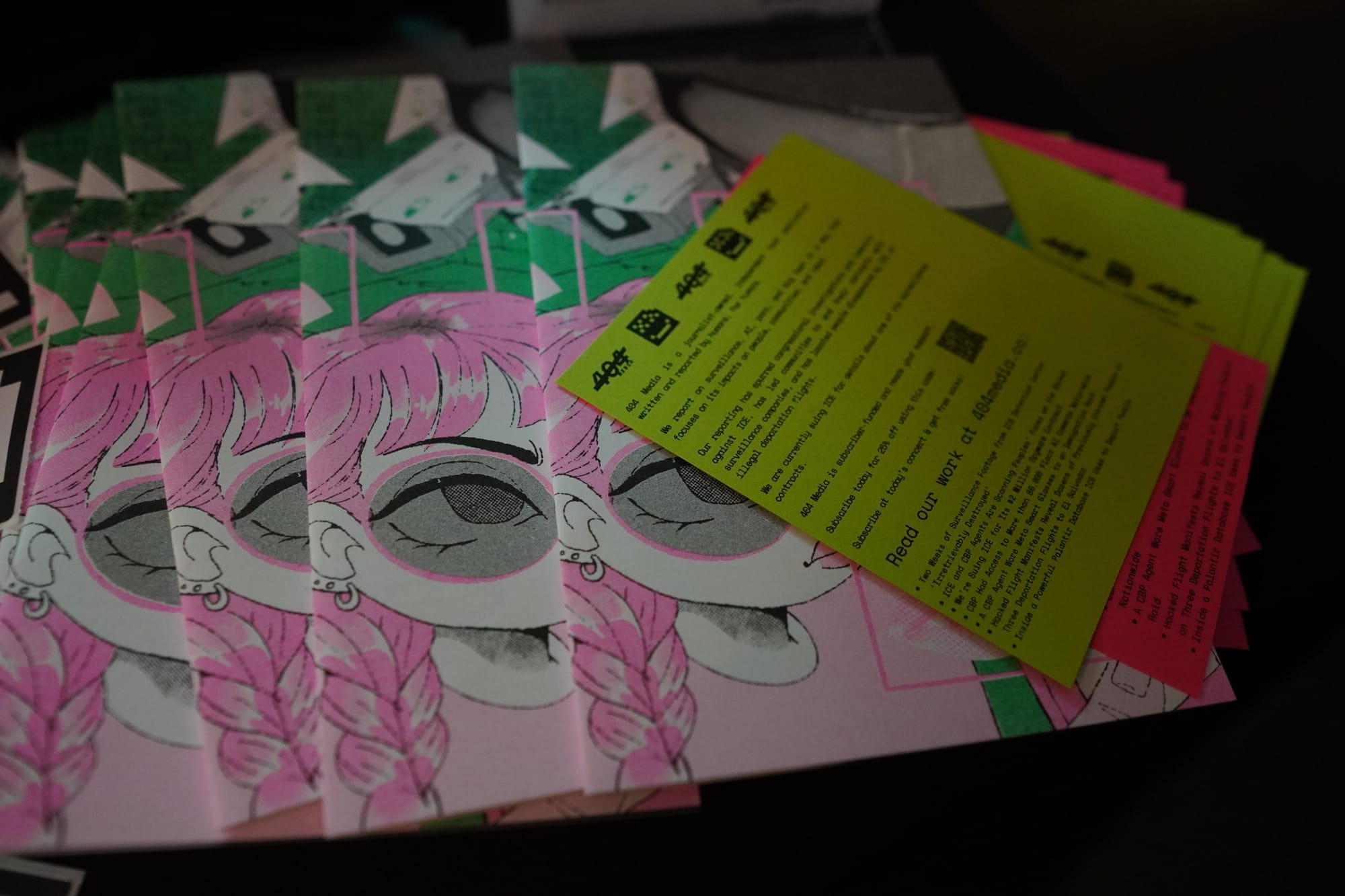
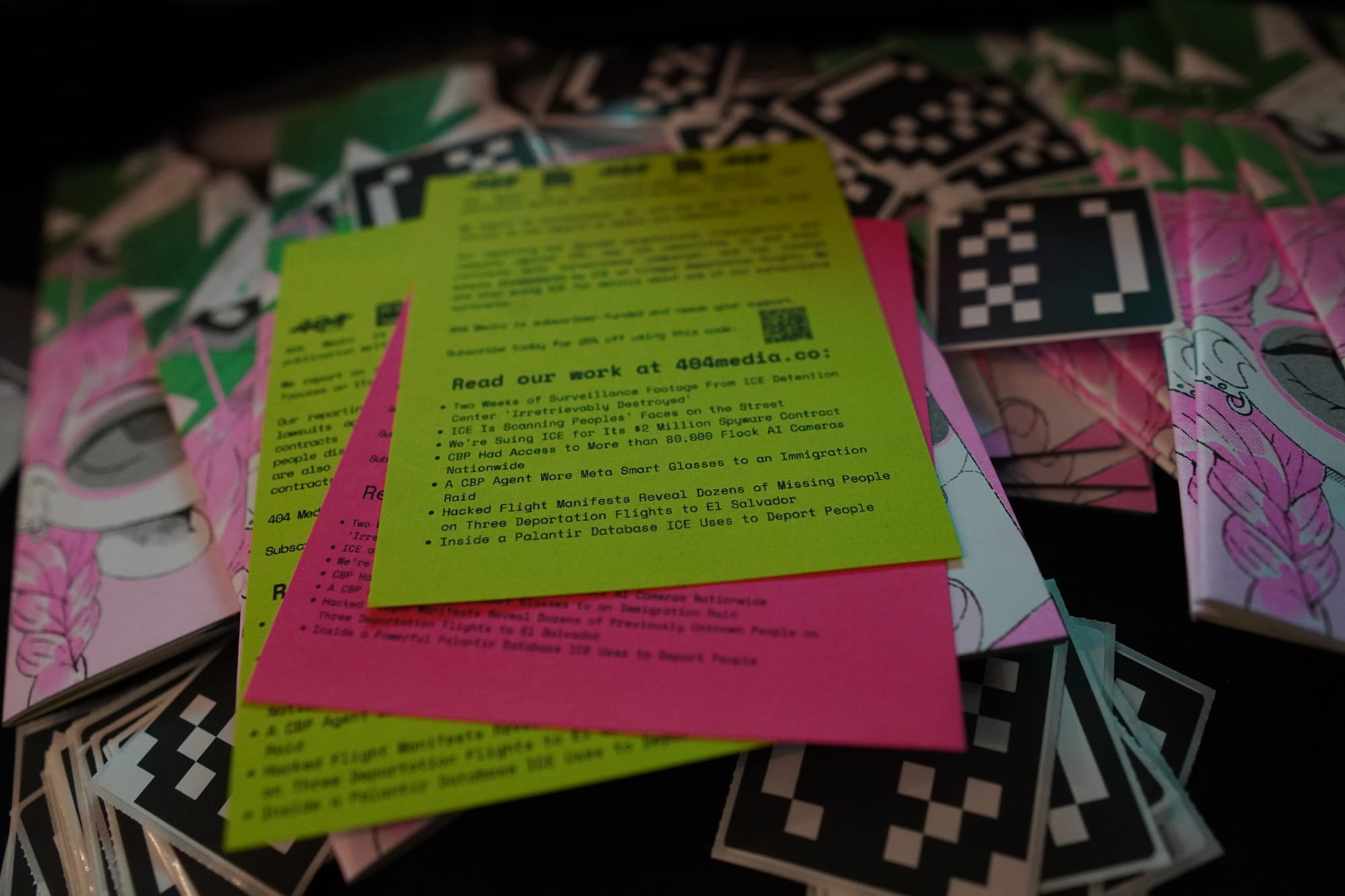
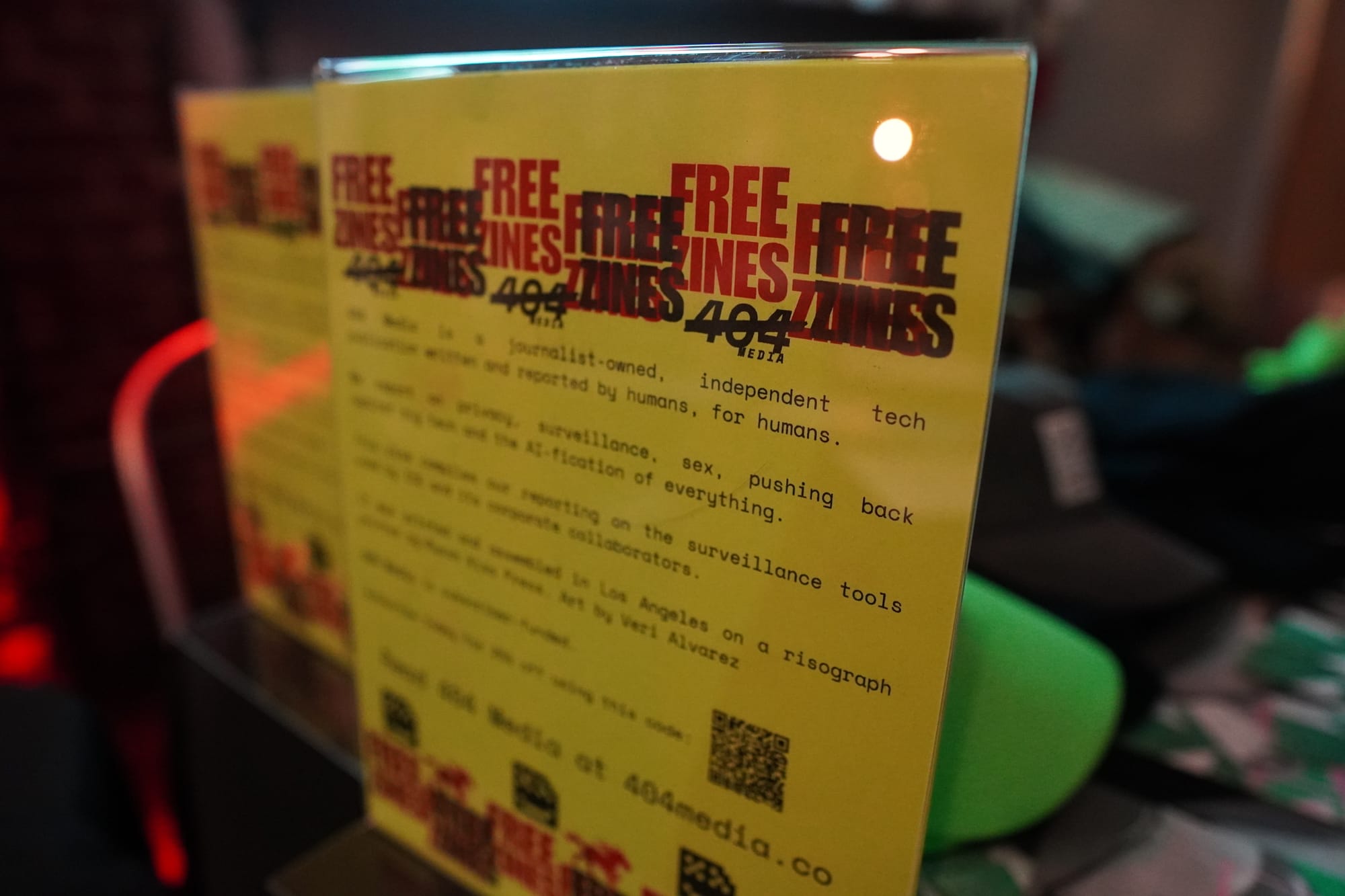
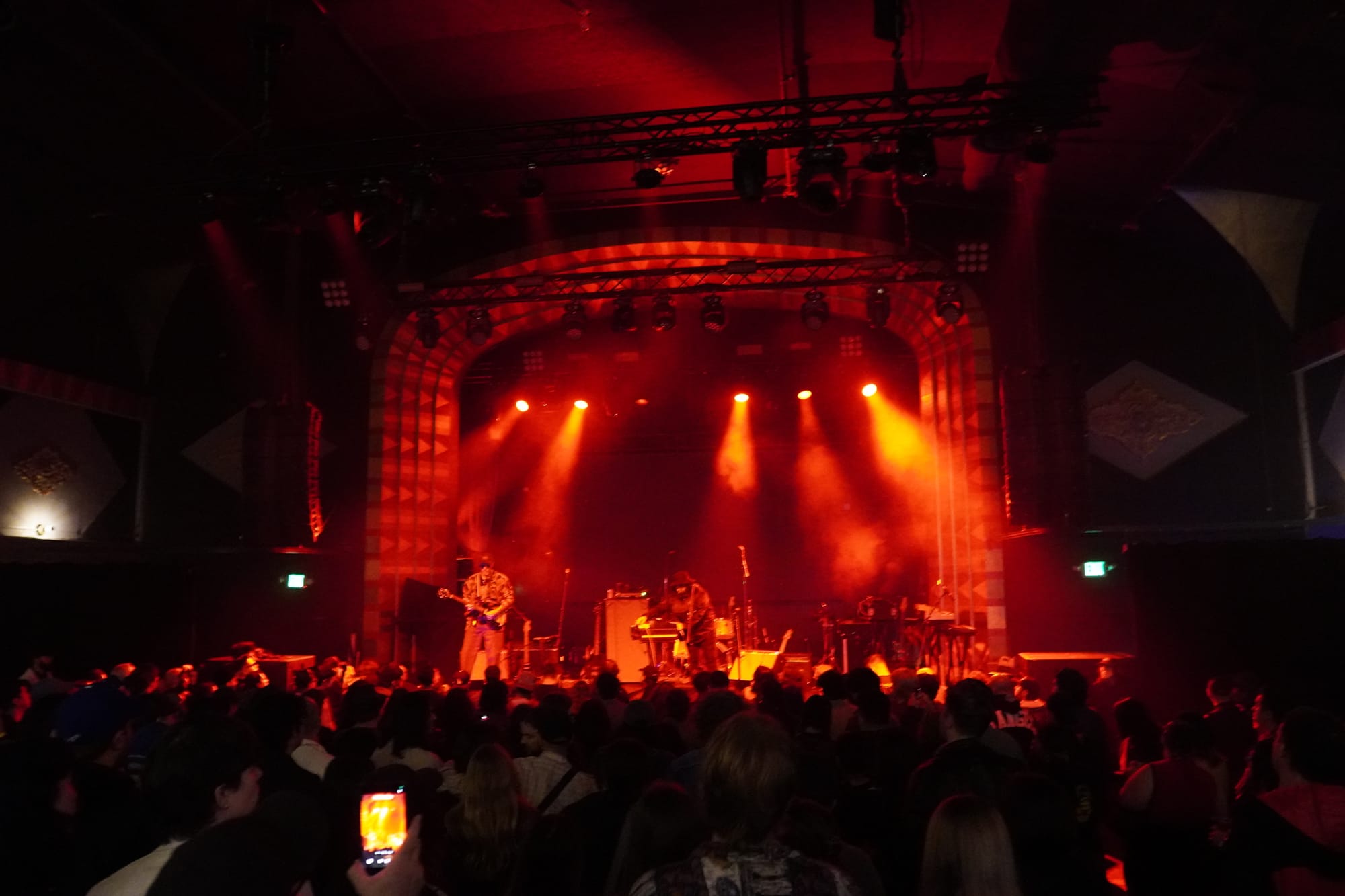
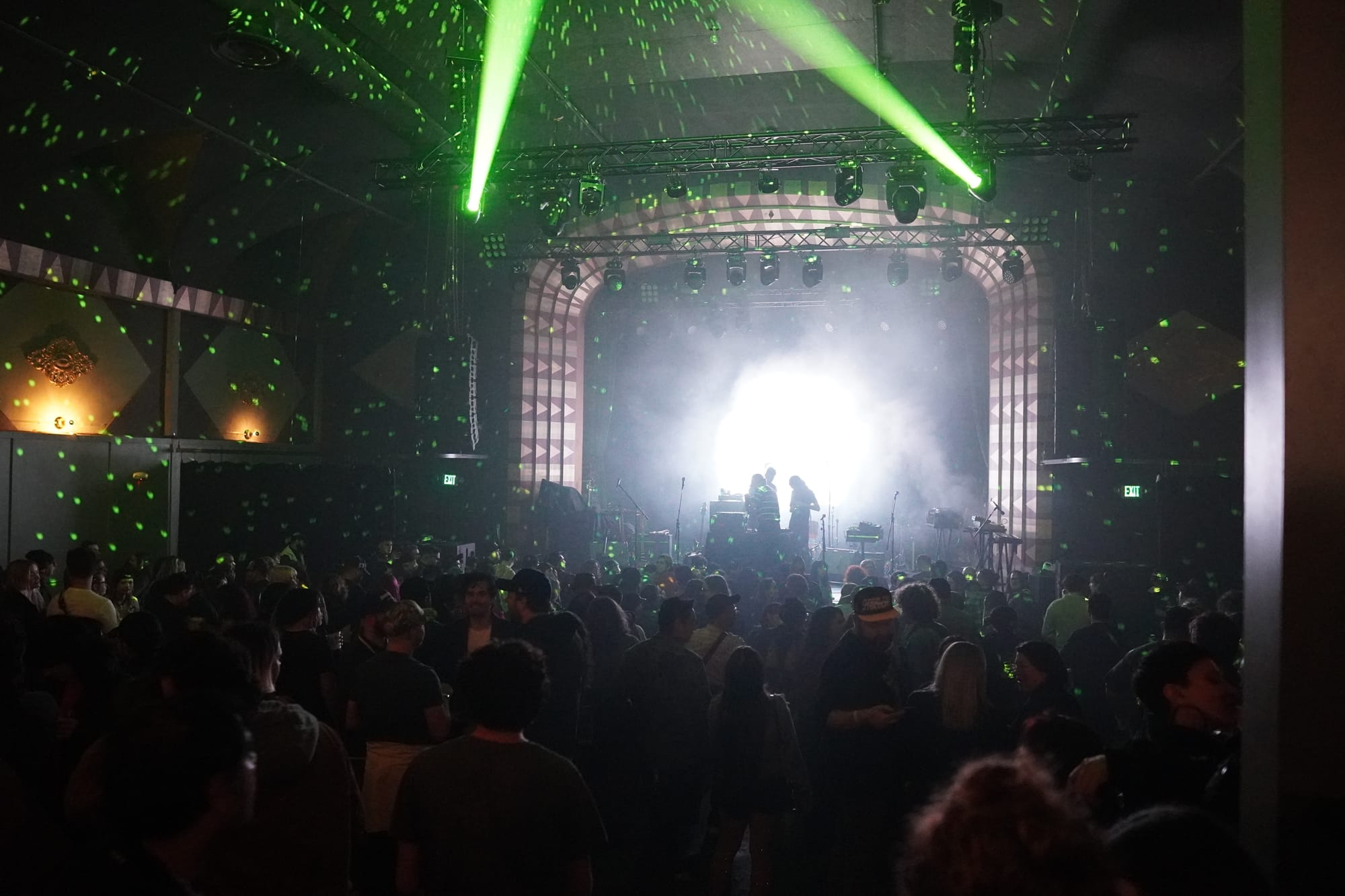
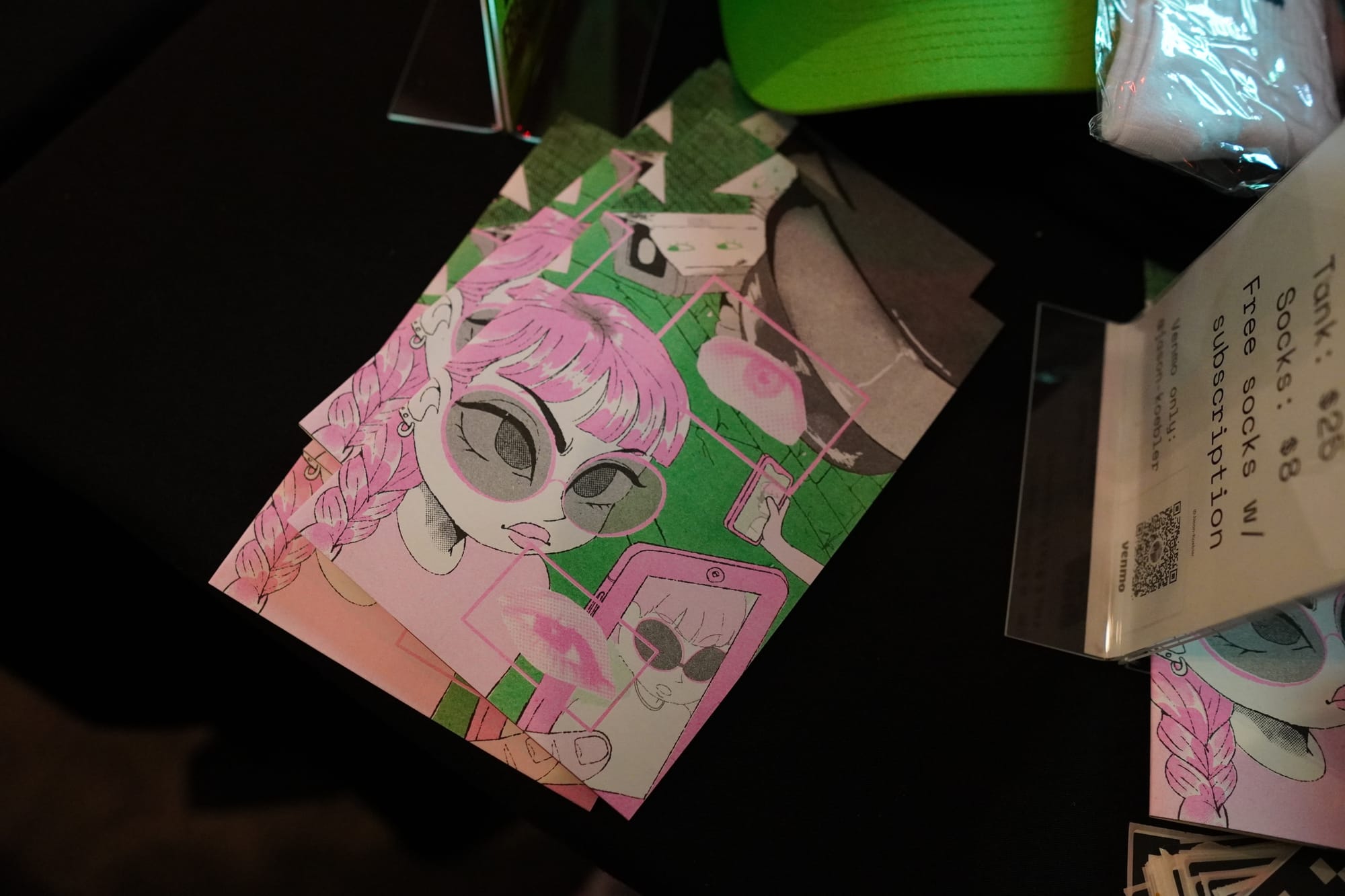
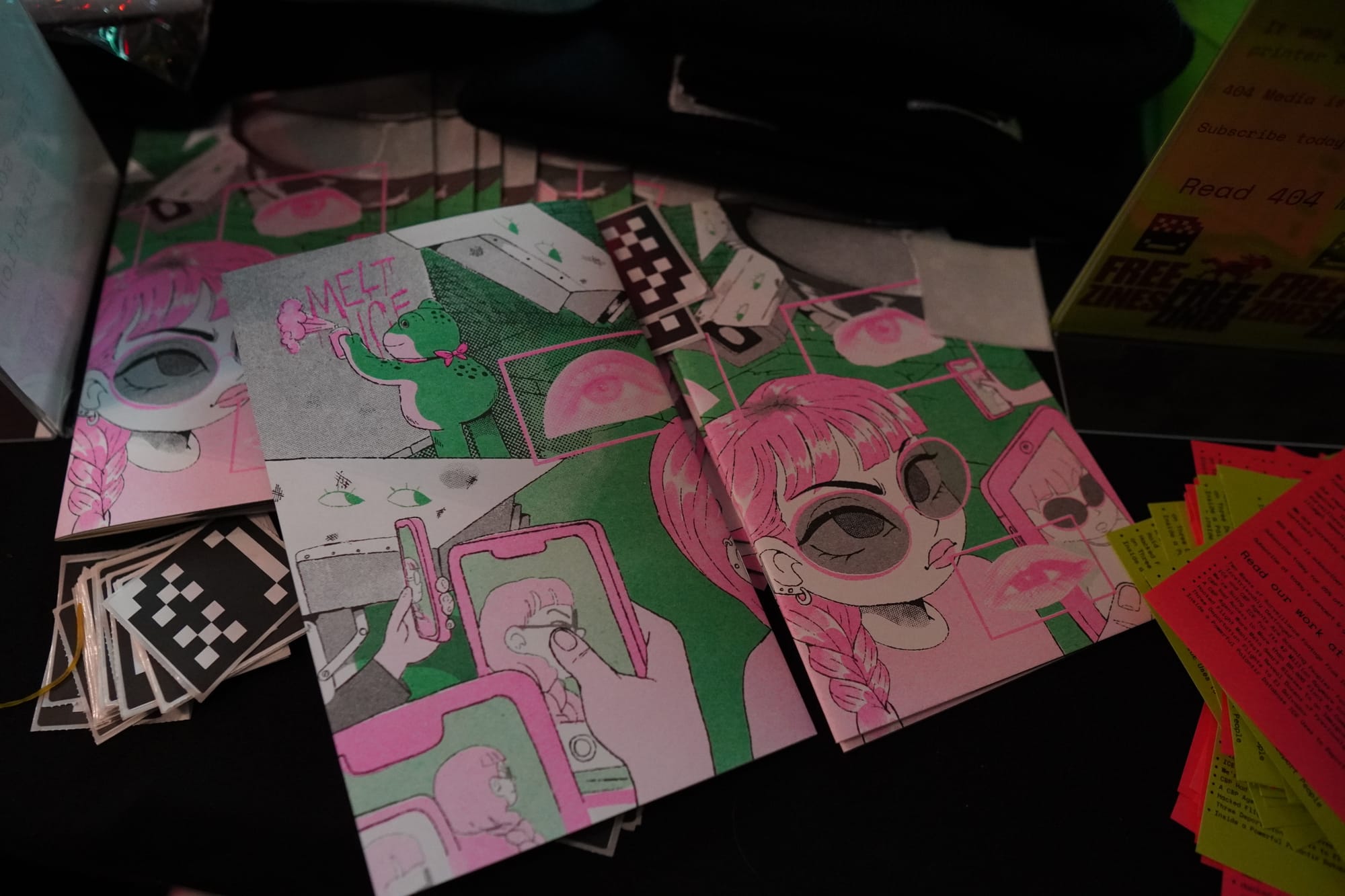
We decided to make a print zine of our work on the issue, which set into motion the actual creation of the zine which you have surely heard about by now. We donated a bunch of them at the show to people who were interested. The concert was this past Sunday, and I am pleased to say that it was incredibly fun, and, more importantly, it raised $52,688 for CHIRLA. The show was sold out or was close to sold out and took place at a real, very cool concert venue in LA called the Regent Theater, where I once saw the death metal band Blood Incantation and the emo band Say Anything (separately).
 Jason Koebler
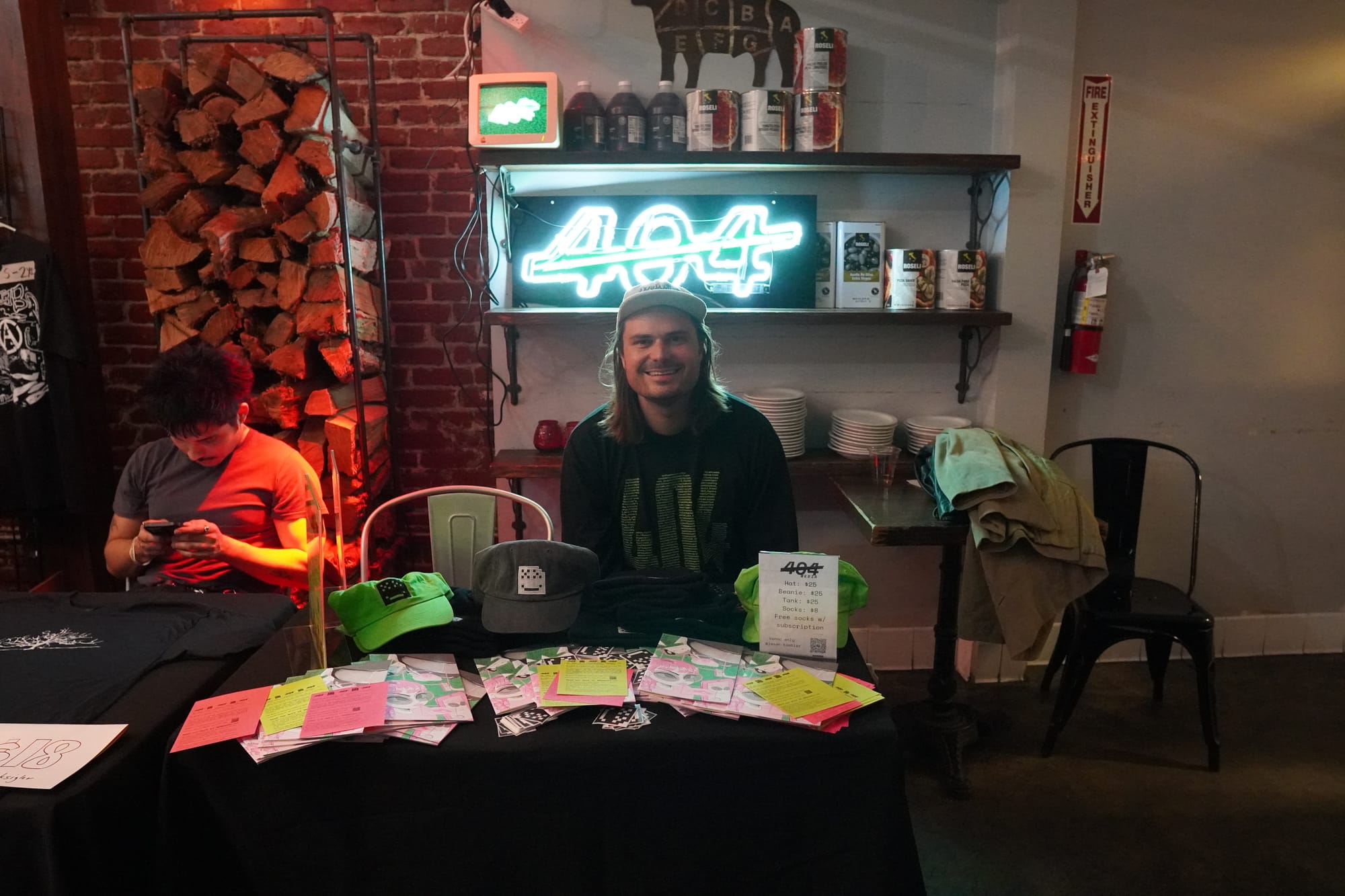
The concert was kind of a whoa dude experience, because I have always been a big concert guy, and it gave me the opportunity to see at least a little bit about how a professional concert goes. I didn’t have a lot of glamor—I mostly sat at the merch booth where we had zines set up in between bands, and watched the bands like everyone else during their sets. But it was still a fun behind-the-scenes experience, getting there way before the show started, watching people set up, vaguely pretending I was a rockstar. Things feel very bleak right now, but it was heartening to see so many people show up to support CHIRLA, and it was good to feel like we were doing something. But most of all, it was clear that very few people there had ever heard of 404 Media and were not familiar with our work, or ICE’s surveillance tactics, or that sort of thing. But they did care about what was happening, and were generally aware of the things that ICE is doing all over the country. So it was a chance to give our reporting to mostly a younger crowd of people who care, and that felt incredibly empowering. This was before ICE killed a woman in Minneapolis, but that made the work feel more important than ever. Hoping we can do more stuff like this this year.
An update on the zine, for those of you who have ordered: We got far more orders than we were expecting. Like, many, many more than we were expecting, and more than we originally asked our printer to make. Because of the way the zine is being made (riso printed, hand assembled), it’s a huge lift for the print shop to put everything together. We wanted more people to have the zine, obviously, so we asked them to print as many as they could. A small batch of zines were finished for this event, but the rest are still being assembled. I’m expecting to have them in the next ~10 days or so and then will start shipping them out. Over the break, I started printing and labeling envelopes with postage, so I’m hoping once we get the copies we’ll get them out to y’all in very short order. We’ve mentioned this before, but this first print run is a bit of an experiment. I think it’s going smoothly so far, but we are a bit delightfully overwhelmed with how many people have been interested, so fulfillment is a bit slower going than I was expecting. We’re excited for everyone to get their copies and excited to see what you think. Once we have copies in hand, we’ll make the zine available online as a PDF both in English and Spanish for our subscribers. We also are technically sold out at the moment but I’m looking for ways to print more in a timely fashion.
Here’s some pictures!