
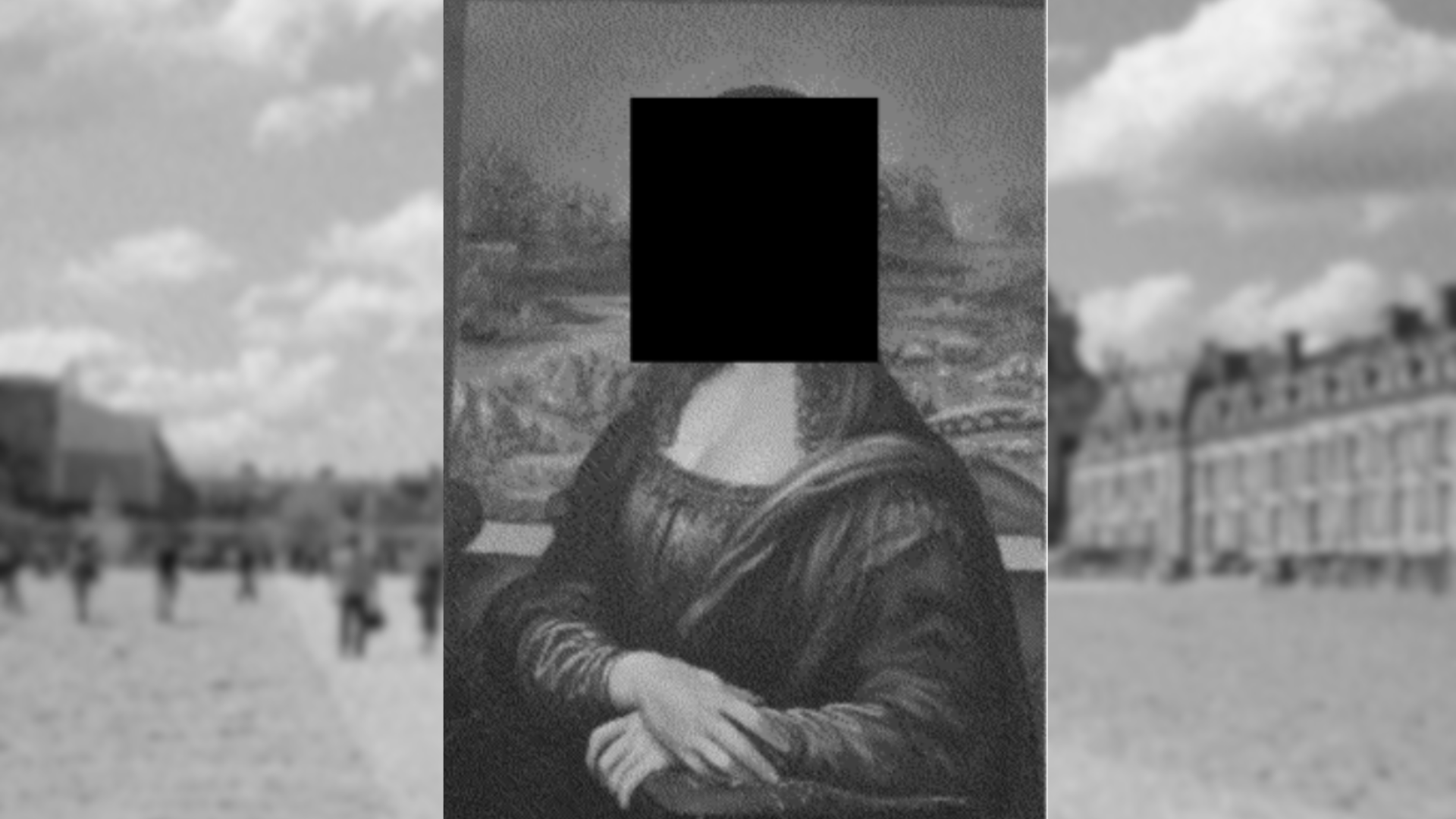
The Department of Justice redacted the face of the Mona Lisa, a 522-year-old painting of an Italian woman who died centuries ago, as part of its release of files related to the late convicted sex offender Jeffery Epstein.
In a PDF of an email with the subject line “simply paris” sent on July 3, 2009, a redacted sender sent Epstein several photos of, presumably, himself and a woman sightseeing in Paris. The photos of the woman are all redacted with a black box over her face, but the man’s face is visible.
The photos are from tourist locations like Disneyland Paris, the Versailles fountains, and the Louvre, where the Mona Lisa is installed. “We just walked around all over the city not just the sight seeing…we took like 1500 pictures so was really difficult to decide wich to send! :)” the sender wrote at the end of the email.
 Samantha Cole
The DOJ redacted the face of the Mona Lisa, believed by art historians to be a Florentine woman named Lisa Gherardini, while failing to redact the names, faces, and nude photos of dozens of Epstein’s victims as part of its latest data dump. As 404 Media reported on Monday, several unredacted, sexually explicit photos of nude women or girls were present in Friday’s data release; the DOJ left those photos online until we reported specific links through their tipline.
Historians believe Gherardini was 15 years old when she married the 29-year-old wealthy merchant Francesco del Giocondo. Her portrait, made immortal by Renaissance painter Leonardo da Vinci, has been in the public domain for hundreds of years.
Here in the year 2026, however, victims of Epstein’s abuse are enduring the fallout of the DOJ’s failure to protect their identities as it dumped another 180,000 images and 2,000 videos into the public’s hands last week, adding to the 40,000 files it released in previous batches in December.
“We are getting constant calls for victims because their names, despite them never coming forward, being completely unknown to the public, have all just been released for public consumption,” victims’ attorney Brad Edwards told ABC News after the release of the files. “It’s literally thousands of mistakes.”
The DOJ did not immediately respond to 404 Media’s request for comment.