
The Islamic State’s online warriors are still posting. It’s been almost a decade since the group lost the Battle of Raqqa and saw its IRL territorial ambitions thwarted. Unable to hold territory in the real world, the group renewed its focus on posting and has started using AI to resurrect dead leaders. And, because social media platforms have gutted their content moderation operations, the terror group’s strategy is working.
The Islamic State’s online success is detailed in a new report from the Institute for Strategic Dialogue (ISD), an independent research institution that studies extremist movements. For the study, researchers tracked IS accounts on Facebook, TikTok, Instagram, WhatsApp, Telegram, Element, and SimpleX. It found videos posted in Discord channels dedicated to video games and tracked how the groups have modified old content to fit on new platforms.
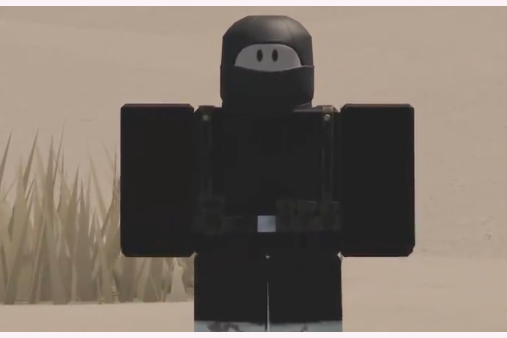
Like many others posting online in 2026, the Islamic State has found success by talking about the Epstein Files, using AI to create new videos of dead leaders, and has begun taking its message to video games like Minecraft and Roblox.
“They are very adept at exploiting platforms [and] spreading messages,” Moustafa Ayad, a researcher at ISD and author of this study, told 404 Media. He noted that the group has been active online for 10 years and that part of their success is a willingness to experiment.
Ayad said that Facebook remains a central hub for IS, despite its push into new spaces. His research discovered 350 IS accounts on Facebook that generated tens of thousands of views. One video of an IS fighter talking to camera had more than 77,000 views and 101 shares. The Islamic State branding is blurred to defeat the site’s auto-moderation.
According to Ayad, Islamic State’s engagement numbers are up across the board. “Trust and safety teams have been rolled back over the past few years…a lot of this is outsourced to third party companies who aren’t necessarily experts in understanding if a piece of content came from the Islamic State,” he said.
Social media companies like Meta used the election of Donald Trump as an excuse to cut back on moderating their platforms. Meta said this would mean “more speech and fewer mistakes.” No policies around terrorism have changed, but broadly speaking the largest social media platforms are doing a worse job at moderating their sites. In practice it’s turned Facebook into a place where a group like the Islamic State can spread its message without falling afoul of content moderation teams. Even three years ago, IS influencers wouldn’t have lasted long on the site.
This rollback of moderation has coincided with a spike in views for IS accounts, the report argues. “Individual IS ‘influencer’ accounts are experiencing higher engagement rates on terrorist content than previously recorded by ISD analysts,” the report said. “It is unclear if this uptick is due to moderation gaps, platform mechanics or specific tactical adjustments by IS supporters and support outlets and groups.”
“We’re not talking about content where there’s a gray area,” Ayad said. “It’s very clearly branded Islamic State…supports violence, supports the killing of minorities, the celebration of bombings, the pillaging that is happening in Sub Saharan Africa.”
Something new is the adoption of AI systems to resurrect dead leaders. Ayad described a video where the deceased IS leader Abu Bakr al-Baghdadi delivered speeches again.
“It’s a sanctioned version of using AI for a ‘beloved leader’ or taking him out of context and placing him in a meadow, surrounded by beautiful flowers, paying homage,” he said. “Some of these circles are strange.”
Another popular topic in current IS propaganda is the Epstein Files. According to Ayad, an AI-generated photo of Donald Trump and Bill Clinton canoodling in bed makes frequent appearances on IS accounts across platforms. The picture is, supposedly, pulled from the Epstein files but it’s a popular fake. Ayad said Epstein has been a perfect springboard for IS to talk about “western degeneracy.”
Ayad has also seen Islamic State videos created using Minecraft and Roblox. “They’re creating these virtual worlds that mimic the Islamic State’s caliphate, literally calling it something like Wilayat Roblox [the Province of Roblox] … and they’ll completely mimic the video styles of well-known Islamic State Videos using Roblox characters. This includes faux executions. It includes Arabic and English voiceover in the same cadence as an Islamic State narrator.”
One of the most famous pieces of Islamic State propaganda is a film called Flames of War: The Fighting Has Just Begun. Ayad has seen multiple 1 for 1 recreations of the film using Roblox characters. “They’re often tied to Discords where a number of users are creating this content. They always claim it’s fake or a LARP,” he said. “To see them in this video game skin is odd, to say the least.”
What drives an Islamic State poster? “It’s done very much for the love of the game,” Ayad said. It’s done for the fact that, as a user, ‘I might not be able to participate in physical Jihad but I can participate in electronic Jihad.’”
Keeping Islamic State off of major social media platforms is a constant battle, but one frustrating finding of the study is that the tactics for avoiding moderation haven’t changed much.
“Techniques included the use of alternative news outlets to rebrand IS news, as well as purchasing or hijacking channels with high subscriber bases. These were then repurposed to share IS content. IS supporters, groups and outlets also use coded language: they sometimes referred to the group as ‘black hole’ or the ‘righteous few’ to confound moderation efforts.”
To fight back against IS online, Ayad said that platforms needed to be better at coordination. Often a group is kicked off of Facebook so it moves to TikTok or another platform where it flourishes. He also said that all the companies need to be more transparent about who they’re kicking off their platform and why.
“Europol does these big takedown days and they’re effective to a certain degree but the fact of the matter is that the Islamic State is spread across an expanse of different platforms and messaging applications,” he said. “They’re able to shift operations to another place, wait it out and regenerate on that platform…it’s not like you’re dealing with an average user, you’re dealing with a user that’s determined to spread their ideology and exploit your platform to their own ends.”
And then there’s the old problem of language. “There needs to just be better moderation of under-moderated languages,” Ayad said. Facebook and other platforms have long been terrible at moderating non-English languages. A lot of rancid content online gets a pass because it’s in Arabic or Bengali.