
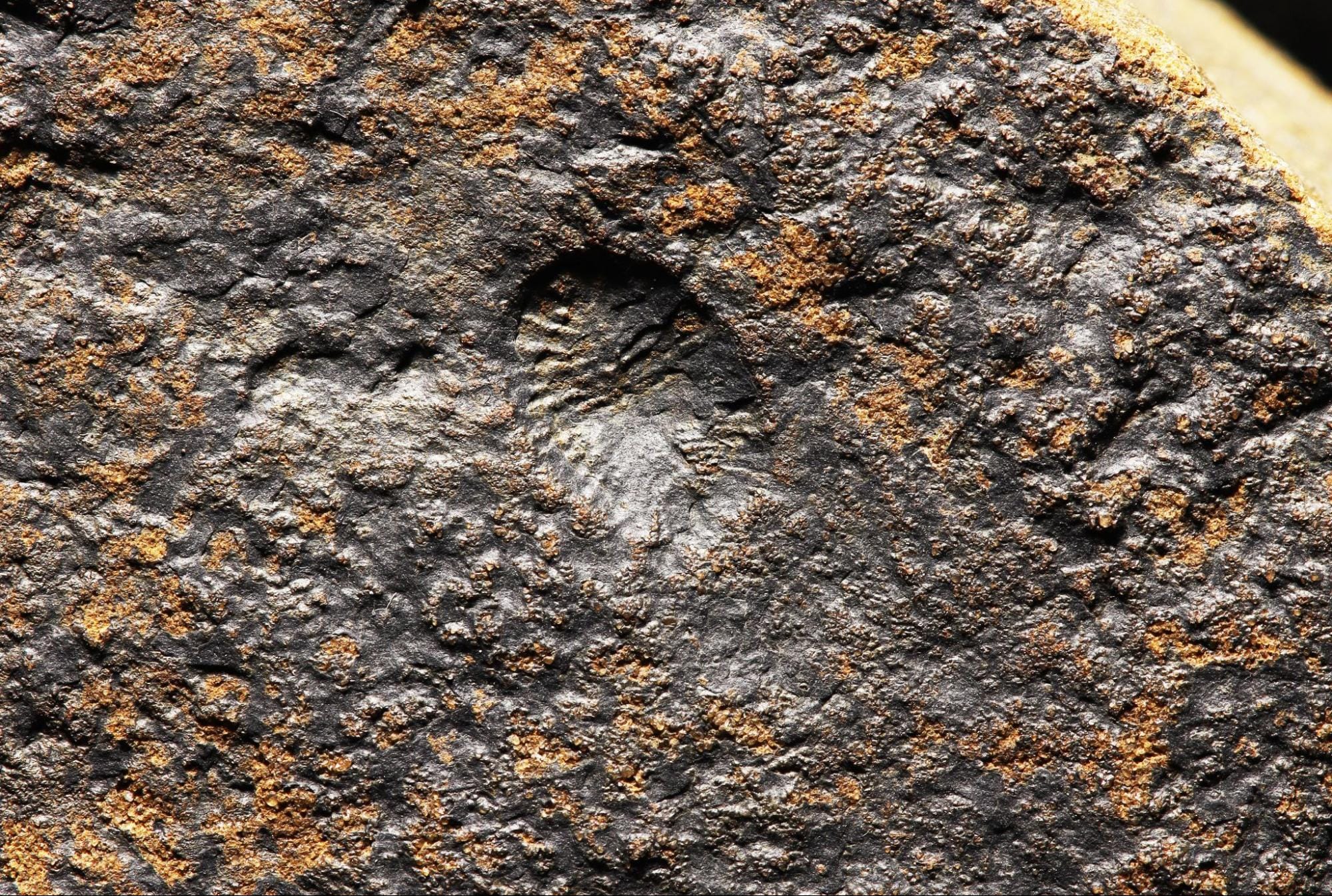
Scientists have discovered the oldest fossilized evidence of sexual reproduction and locomotion in animals at a remote site in Canada’s Northwest Territories that dates back 567 million years to the Ediacaran period, according to a study published on Wednesday in Science Advances. According to researchers, the finding pushes the origins of animal sex back by 5-10 million years.
The newly unearthed fossils were deposited in a fossil layer known as the White Sea assemblage that is preserved in parts of Russia, Asia, and Australia, but has never been found in North America before.
The discovery offers a snapshot of otherworldly species such as Aspidella, an animal that looked like a flying saucer with concentric ring patterns; Dickinsonia, a mouthless pancake of a creature that absorbed food through its bottom surface, clusters of tubular Funisia animals that offer the oldest evidence of sexual reproduction in animals; and an unidentified anchor-shaped lifeform that may represent a new species. These animals lived in offshore waters at about 600 feet of depth, far from coastal shelves.
“We know, mostly from rocks in Australia, as well as some famous rock units in Russia, that taxa like Dickinsonia could move, and that taxa like Funisia probably reproduce sexually,” said Scott Evans, a curator and professor at the American Museum of Natural History who led the new research, in a call with 404 Media.
“The cool thing about this study is that we’re finding those same fossils in rocks that are at least seven million years older than the oldest previously known,” he added. “It’s exciting to be able to say that they weren’t just around for a blip of time. They were around for a really long period of time in our history.”
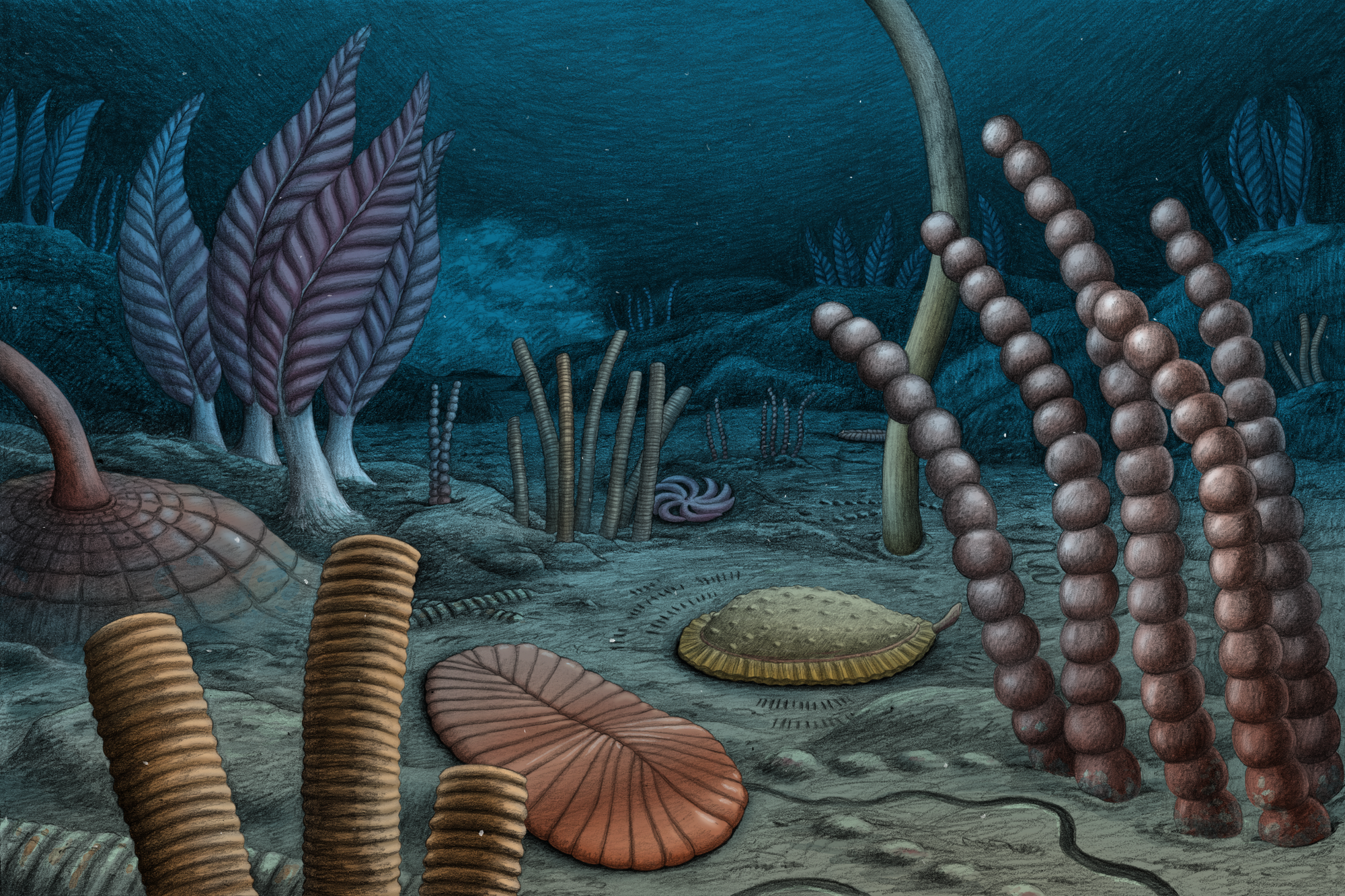
The Ediacaran era, which elapsed between 635 to 541 million years ago, marked the transition from microscopic organisms to much larger lifeforms, setting the stage for the Cambrian “explosion” of animal life that directly followed it. But though the Ediacaran was the dawn of truly complex and visible life on Earth, fossils from this time are rare in part because organisms were soft-bodied, lacking bones or shells that are more conducive to preservation.
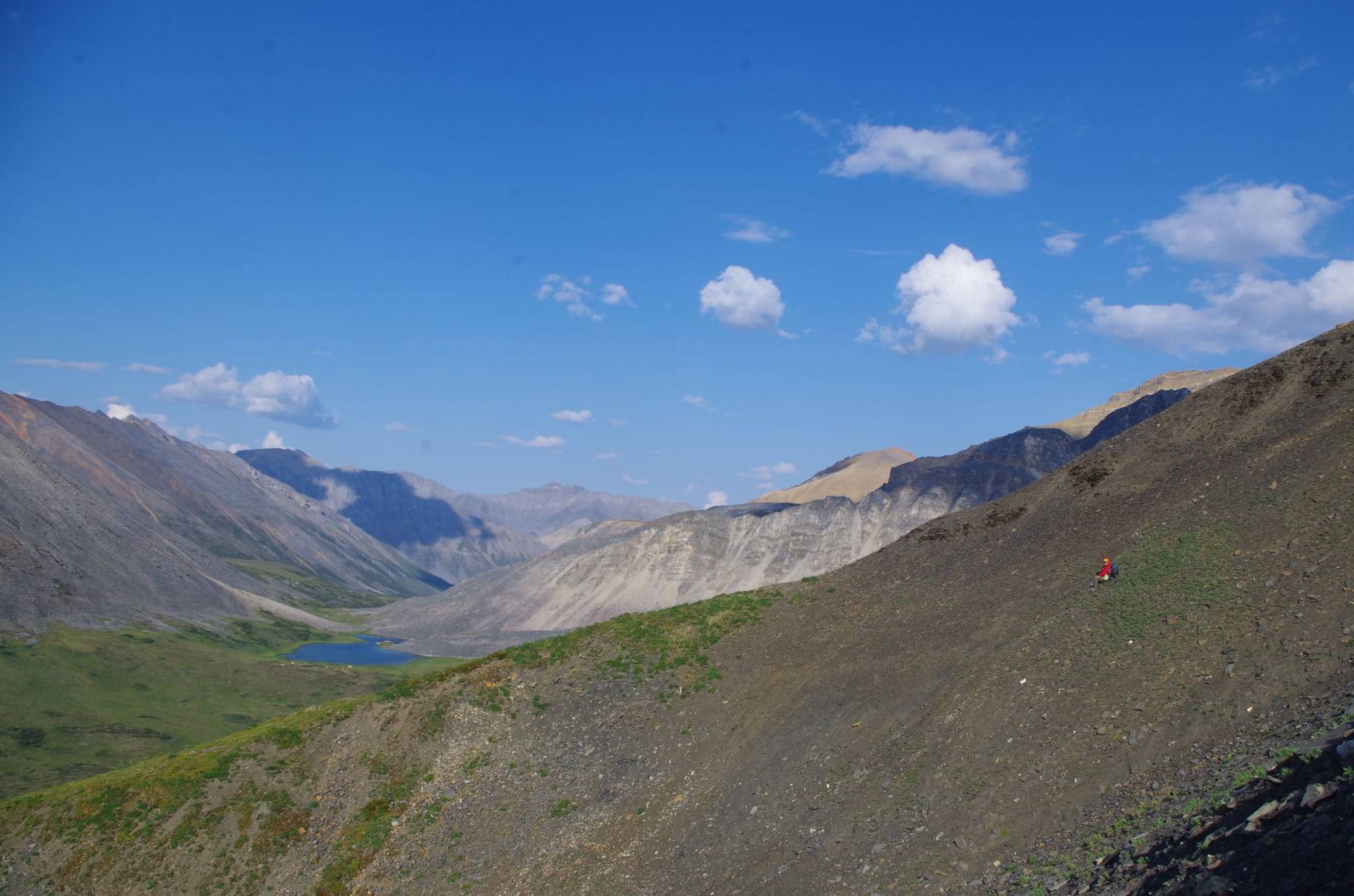
That said, some Ediacaran ecosystems have been fortuitously entombed in stone molds in assemblages around the world, offering a glimpse of this bizarre lost world. For decades, paleontologists have explored these ancient ecosystems at the Blueflower Formation in the Sekwi Brook area of the Northwest Territories.
In 2024, Evans and study co-author Justin Strauss of Dartmouth College discovered a new site that exposed the first known White Sea fossils in North America, opening a new window into these early ecosystems. For Evans, it was especially thrilling to find the remains of Dickinsonia, an organism he has spent years studying and had never been found in North America before.
“We’d always joke, ‘wouldn’t it be crazy if we found Dickinsonia?’” Evans recalled, referring to his past fieldwork in the region. “So, on day one to find it out there was almost comical, but it’s because Justin knows the rocks and knew they were right to look for them. That’s the key.”
Sexual reproduction initially evolved in simple microbes some two billion years ago, but Funisia is the oldest example of animal sex that is known from the fossil record (though there were no doubt earlier sexual pioneers that are not preserved). These worm-shaped animals are often found in dense clusters that imply they reproduced through mass spawning events in which they released sperm and egg into the water column, a strategy still used by corals and other marine animals today.
The team’s discovery of Dickinsonia, along with another strange bottom crawler called Kimberella, also offer the earliest fossil evidence of movement in animals.
One of the most evocative finds is a tiny organism that likely represents a new species and genus, though the remains are too indistinct to clearly identify it. It resembles a known organism called Parvancorina, which looks like an anchor came to life, but it will take more specimens to pin down its lineage.

“We don’t know what it is,” Evans said. “It’s hard because these fossils are soft-bodied things that were buried under sand and compressed. They can be distorted, stretched, and so when you find just one, it’s really hard to know that the shape you’re seeing is how it’s typically preserved, or maybe this is just a weird specimen that got stretched in a certain way.”
“It is very tantalizing to think this is a new species, but we are not ready to name it yet,” he added. “But that’s why we’ll go back and spend a lot more time crawling over these rocks.”
Indeed, the team only spent five days at this site last year, so there is plenty of ground left to cover. In addition to looking for new specimens, the researchers hope to understand the broader context of this assemblage.
For example, the fact that these thriving ecosystems emerged in deep offshore waters suggests that these environments may have provided stability for nascent animal life, compared with shallow coastal regions.
Later in the fossil record, it is more common to find organisms that emerge first in shallow waters near the shoreline, and then follow the opposite trajectory by colonizing the deeper ocean. Future fieldwork could reveal more insights into this early flourishing of complex life, and how it laid the groundwork for everything that has happened since.
“This is one of the few places on Earth where we have over a kilometer of rocks that cover this period where we think animals first appear and diversify,” Evans concluded. “The hope is that by continuing to go back to these sites, we’ll get a lot more information on patterns of change through that interval.”