
Welcome back to the Abstract! These are the studies this week that searched for life in the dark, stood up for hedgehogs, dropped some wisdom, and died in an inexplicably epic explosion.
First, aliens might be riding around interstellar space on exomoons, just in case that’s of interest to you. Then: an ultrasonic solution to roadkill, the limits of metrification, and an answer to a cosmic mystery.
As always, for more of my work, check out my book First Contact: The Story of Our Obsession with Aliens or subscribe to my personal newsletter the BeX Files. b
The view from a rogue exomoon
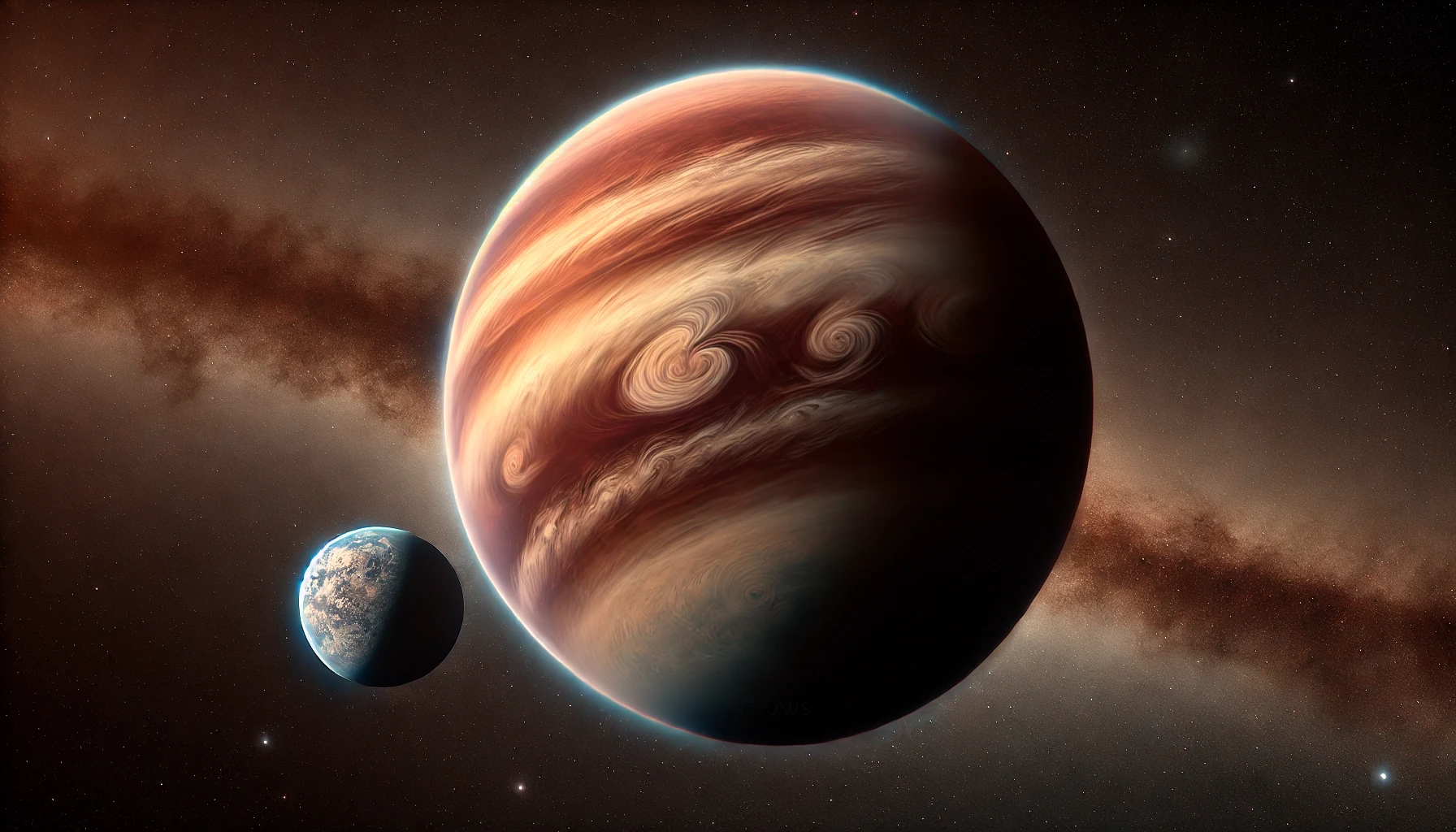
Living on a planet with a boring old Sun is for normies. In a new study, astronomers suggest that alien life could potentially emerge in a much more unexpected place—”exomoons” that orbit free-floating planets in interstellar space.
There are likely trillions of rogue planets wandering through the Milky Way, untethered to any star, raising the tantalizing mystery of whether any of them could be habitable. Now, researchers led by David Dahlbüdding of the Max Planck Institute for Extraterrestrial Physics (MPE) extend this question to exomoons that were dragged out into interstellar space with their planets.
“The search for exomoons within conventional stellar systems continues with no confirmed detection to date,” the team said. “Thus, free-floating planets might offer an alternative pathway for the first discovery of an exomoon.”
In other words, astronomers have never clearly seen an exomoon. But new techniques for spying free-floating worlds—such as microlensing, which reveals objects through the warped light of their gravity—could provide the sensitivity that is required for this long-sought detection.
With regard to potential habitability, Dahlbüdding and his colleagues focused specifically on exomoons that orbit planets with thick hydrogen atmospheres. If such a pair were to be kicked out of a star system, the exomoon’s orbit could become stretched out into a far more elliptical shape. This shift would cause the planet to exert more intense tidal forces onto its satellite, generating heat that could keep liquid water flowing on the moon over vast timescales.
“Close encounters before the final ejection even increase the ellipticity of the moon’s orbit, boosting tidal heating over millions to billions of years, depending on the moon’s and free-floating planet’s properties,” the team said. The tidal forces and atmospheric components could also “create favourable conditions for RNA polymerisation and thus support the emergence of life.”
“These potentially habitable moons could be detected through a variety of techniques,” including microlensing, the researchers added, though they noted that actually analyzing their atmospheres “may not be feasible with any instruments currently in operation.”
While we may not be able to spot signs of life on these worlds anytime soon, it would be exciting just to discover a planet and a moon bound together, but unbound from any star, which is a genuine near-term possibility.
In other news…
Ultra-sonic the hedgehog
Hedgehogs have long been ubiquitous in Europe, but cars now kill up to one-third of their population each year. Even more nightmarish, the advent of robotic lawn mowers has led to an uptick in hedgehog deaths.
To help protect these iconic critters, scientists suggest testing out acoustic repellents. A series of experiments with 20 hedgehogs from a wildlife rescue established that “hedgehogs can perceive a broad ultrasonic range,” with peak sensitivity around 40 kHz.

The results “show a potential for the development of targeted ultrasonic sound repellents to deter hedgehogs temporarily from potential dangers such as the particular models of robotic lawn mowers found to be hazardous to hedgehog survival, and more importantly, cars,” said researchers led by Sophie Lund Rasmussen of the University of Oxford.
“Designing sound repellents for cars to reduce the high number of road-killed hedgehogs enhances animal welfare and supports conservation of this declining flagship species,” the team concluded.
To channel the old joke, why did the hedgehog cross the road? Answer: Ideally it didn’t, due to scientific intervention. (I’ll be here all night).
Dropping in on science history
The metric system has been adopted by every country except Liberia, Myanmar, and the United States. But even as metrication was rapidly embraced in the 17th and 18th centuries, a far more imprecise system—the drop—refused to drop out.
People have measured liquids in drop form for thousands of years, and still do in many contexts today. Researchers led by Armel Cornu of Uppsala University have now explored how such “non-standard units survive lengthy waves of standardization.” The paper is worth a read for its many interesting asides, like how acids were tested “by counting the number of drops…that could be placed on the skin before one witnessed the effects.” Gnarly.
It also gets into the political dimensions of metrication, including this proto-populist justification for standardizing units: “Numerous complaints about the diversity of measurements and their lack of cross-readability” were directed with “a special ire at powerful lords who abused standards in order to extort the population,” Cornu’s team said. The metric system was one response to “the discontent of peasants and the little people against the powerful.”
Anyway, a little bit of drop-related science history never hurt anyone—unless you volunteered to be an acid tester.
A (dead) star is born
Astronomers have discovered the mysterious power source of rare and radiant stellar explosions called “Type I superluminous supernovae” which are ten times brighter than regular supernovae.
The secret superluminous sauce, as it turns out, is the birth of a magnetar, a highly magnetized stellar remnant, according to a supernova first observed in December 2024. The light from this stellar explosion contained imprints of the Lense–Thirring effect, in which spacetime is dragged around by massive and rapidly rotating objects, a key sign of a magnetar origin.
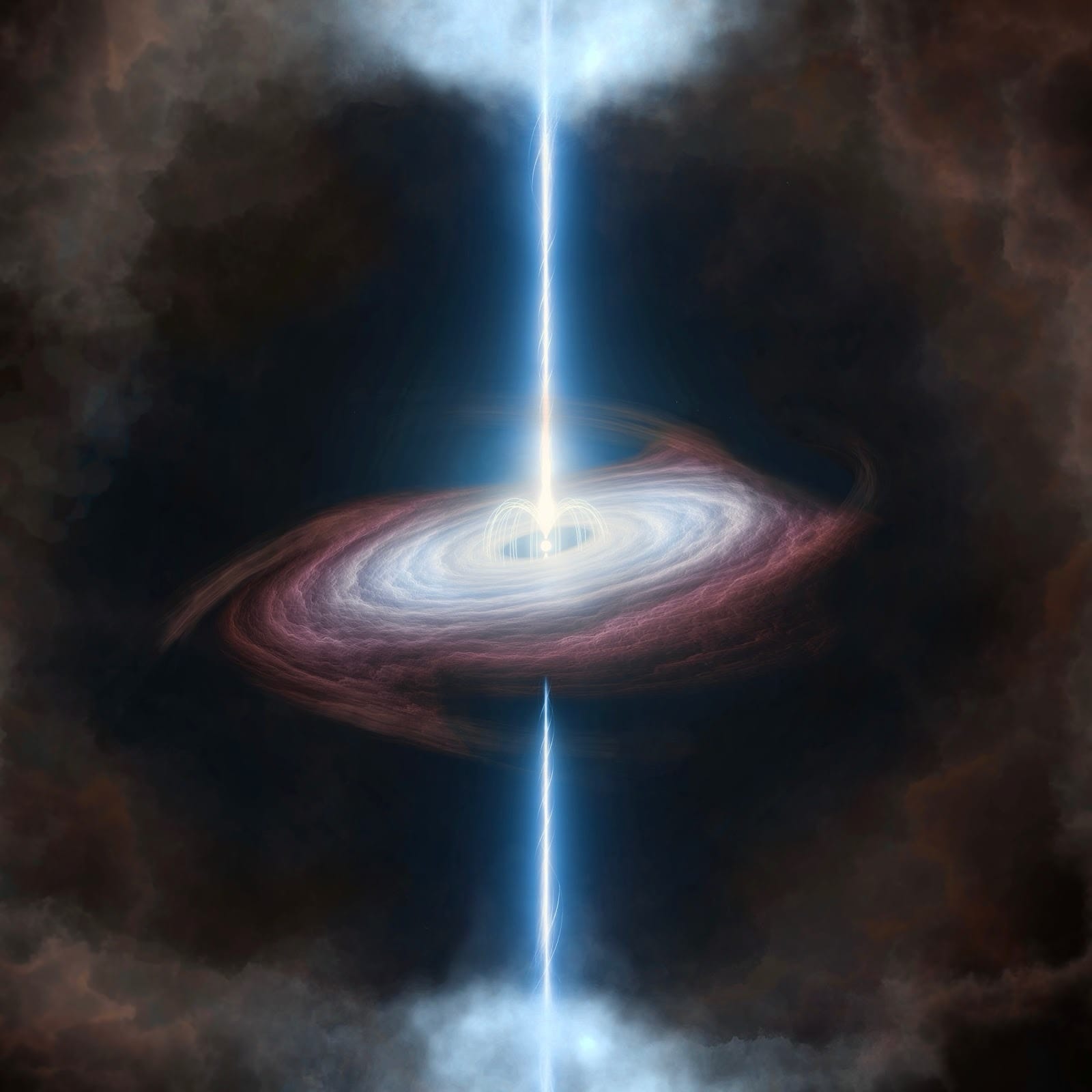
“Our observations are consistent with a magnetar centrally located within the expanding supernova ejecta,” said researchers led by Joseph Farah of Las Cumbres Observatory. “These results provide the first observational evidence of the Lense–Thirring effect in the environment of a magnetar and confirm the magnetar spin-down model as an explanation for the extreme luminosity observed in Type I superluminous supernovae.”
“We anticipate that this discovery will create avenues for testing general relativity in a new regime—the violent centres of young supernovae,” the team concluded.
Forget “stellar” as slang for great; we have graduated to “superluminous.”
Thanks for reading! See you next week.