
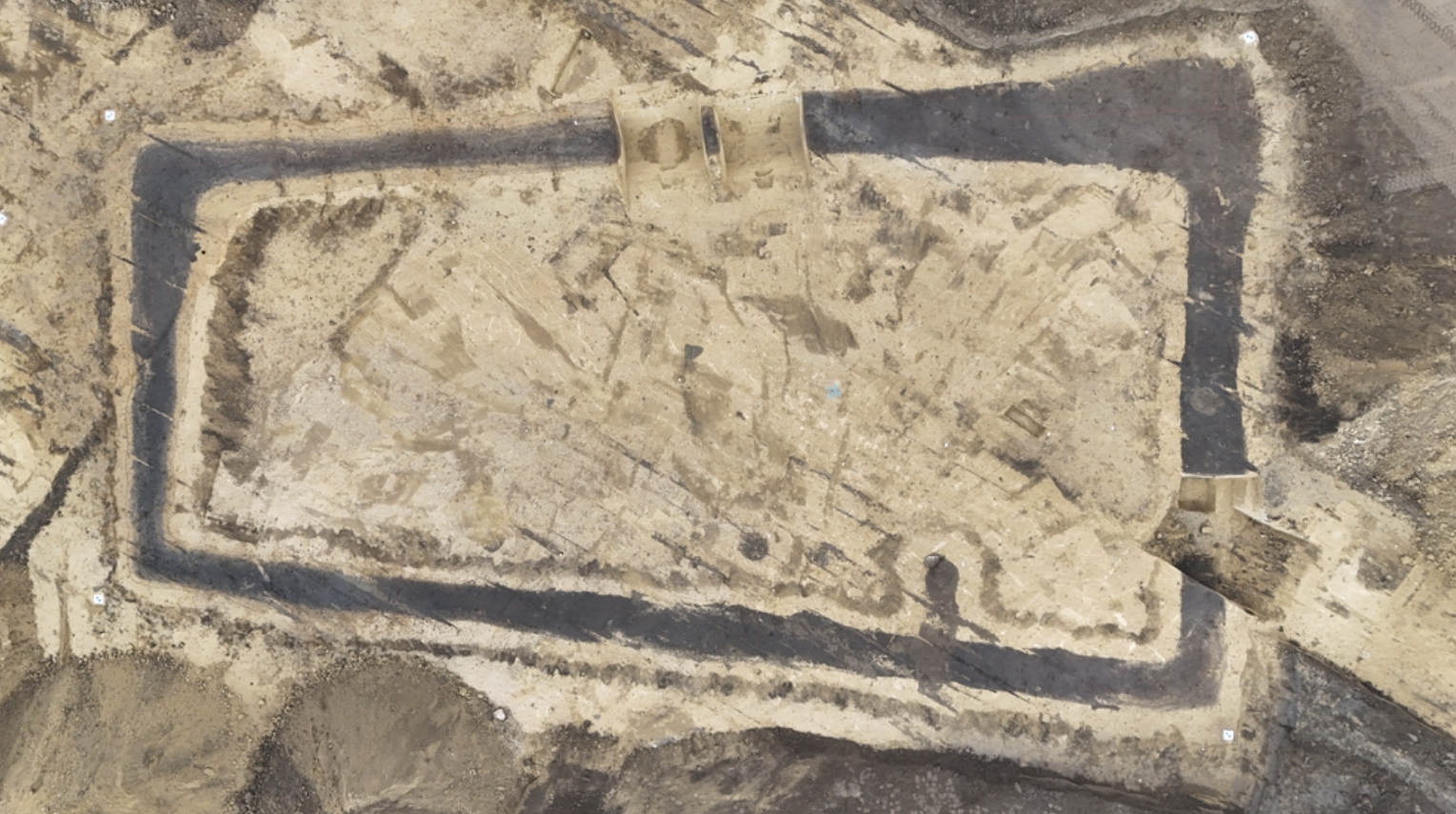
Archeologists in Germany have unearthed a mysterious underground tunnel built centuries ago within a prehistoric burial ground, marking a “very special” discovery according to a recent release from the State Office for Monument Preservation and Archaeology (LDA) of Saxony-Anhalt.
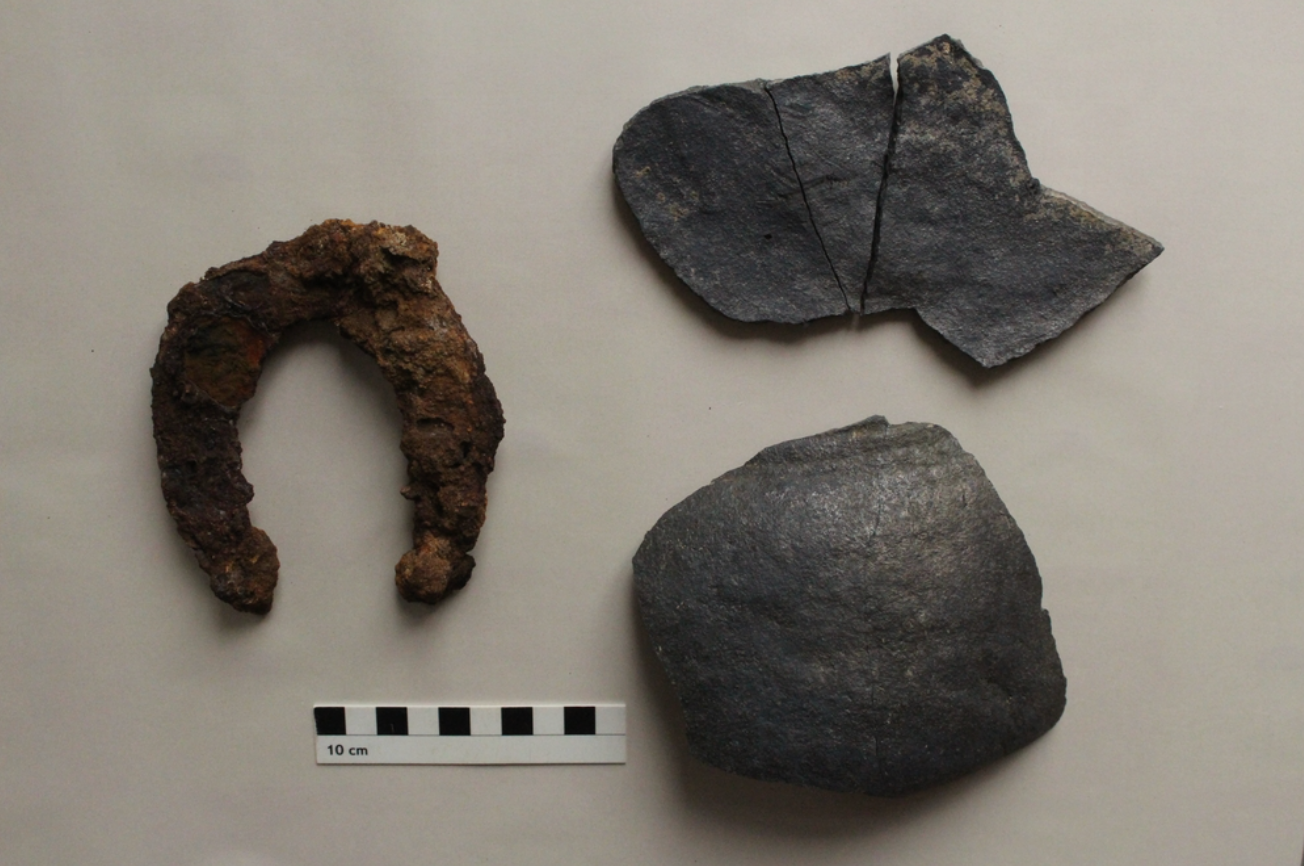
The buried tunnel measures about two-feet wide and four-feet high, and was likely constructed anywhere between 800 to 1,100 years ago near the town of Reinstedt. Archeologists found pottery that dates to about the 13th or 14th century in the chamber, and also discovered a separate cavity that contained a horseshoe, a fox skeleton, and some small mammal bones. A layer of charcoal in the tunnel suggests that fires were once lit in this space.
The tunnel is just one of hundreds of similar structures, known as erdstalls, that have been discovered across Europe. Fascinatingly, nobody knows what function they served, with the debated possibilities including use as hideaways or sites for cultic activity. Erdstalls are “man-made underground tunnel systems, sometimes with chamber-like extensions,” said Jochen Fahr, an archaeologist at LDA who organized the excavation in an email to 404 Media. “Around a dozen such findings are known from the federal state of Saxony-Anhalt, which means that the density of these structures is lower in our region than it is in others. Their function has not yet been clarified and may also vary from case to case.”
“Possible interpretations include hiding places in case of danger or storage cellars,” Fahr continued. “A cultic-religious function could also be possible, as a kind of Christian chapel. The interpretation of these structures is made more difficult by the fact that the examples known to us contain little or no archaeological finds, which makes it very difficult to draw any firm conclusions on their function.”
Researchers initially set out to survey this site last year before the construction of wind turbines in the area. The site was already known as the location of a trapezoidal ditch that was used as a burial ground by the Baalberge people, who lived in Saxony-Anhalt during the Neolithic period of prehistory 6,000 years ago.
“In the course of the site‘s further investigation and documentation, the erdstall was discovered,” Fahr explained. “It had been dug into the southern part of the trapezoidal ditch thousands of years after the ditch‘s construction. Initially, the erdstall appeared as a well-defined elongated oval pit, about two meters long and up to 75 centimeters wide, which cut the older ditch almost at right angles.”
“This led to the assumption that it could be a burial—but the fact that the finding then turned out to be something completely different, that it was in fact an erdstall, was an unexpected surprise that caused fascination and excitement among the team,” he added.
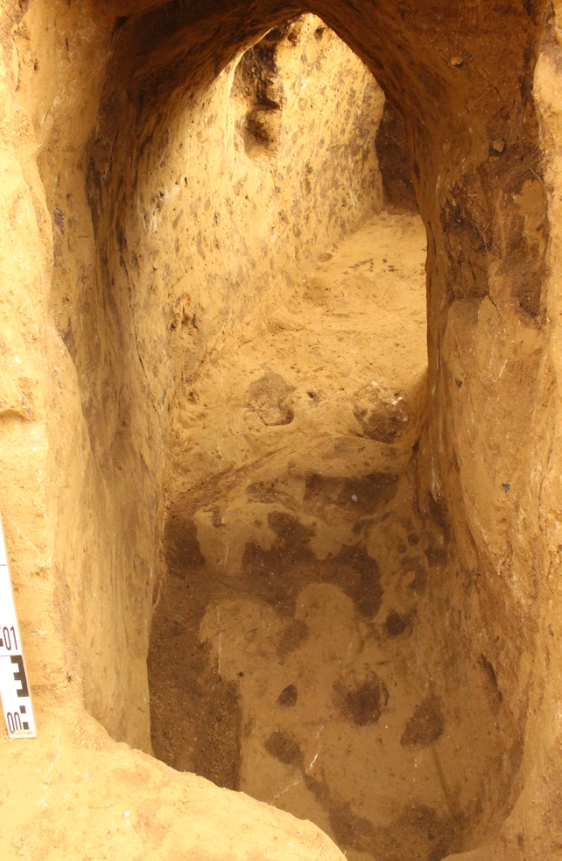
The team speculated that the people who dug out this passageway may have deliberately selected the ancient burial ground as a secret hideaway. The area may have been “generally avoided by the population due to its special nature—perhaps a pagan burial site—and was therefore particularly suitable as a hiding place,” according to the press release.
Hundreds of erdstalls have been found across Europe, and they are often associated with local folklore passed down across generations. Because the tunnels are normally extremely narrow, some legends cast erdstalls as home to dwarfs, goblins, and other diminutive mythical creatures, which is why they are known as Schratzlloch (goblin holes) or Zwergloch (dwarf holes) in some regions.
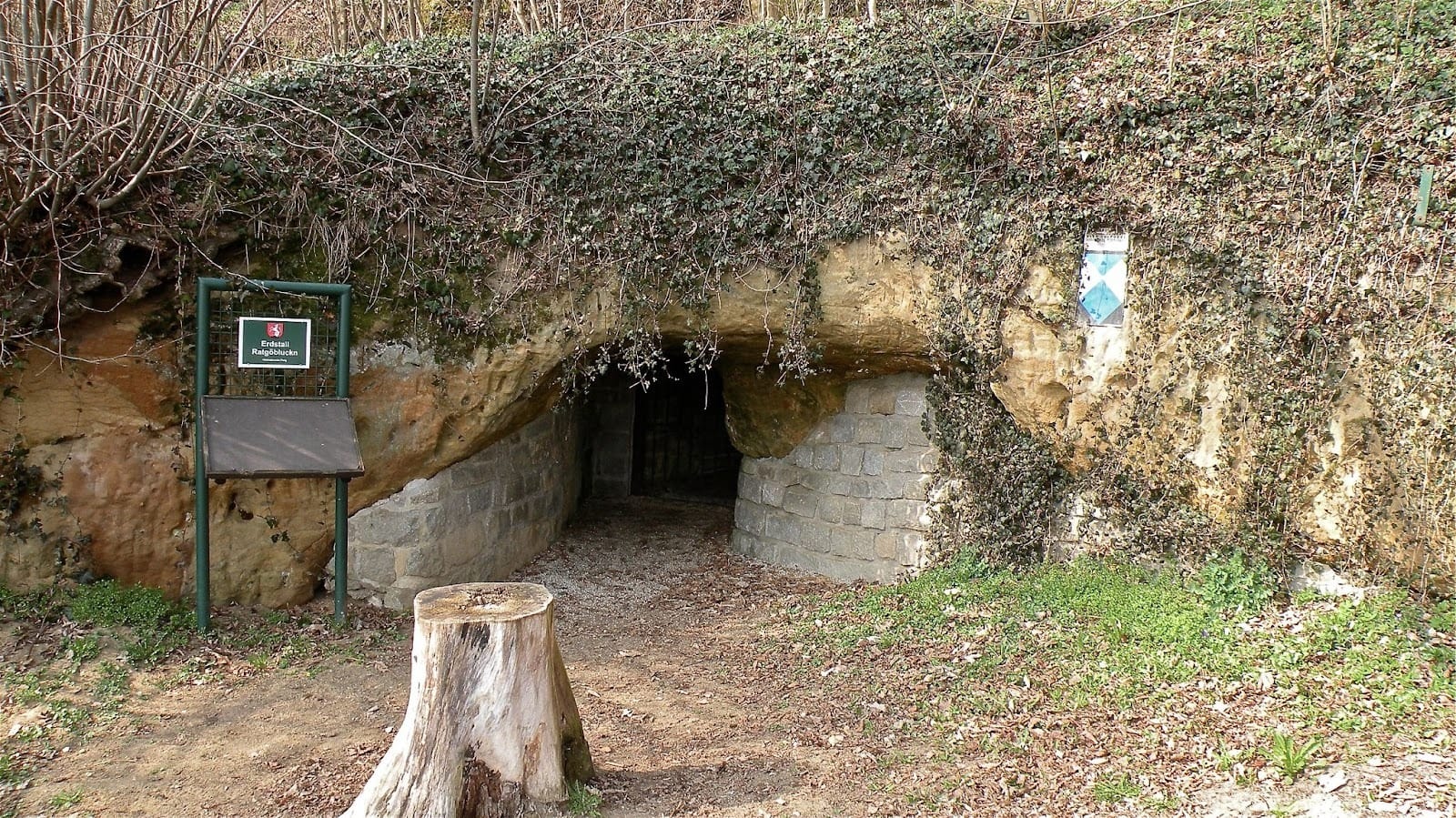
Some of the most famous examples include the Beate Greithanner erdstall, a passage that was discovered in 2011 after a dairy cow fell into it. The Ratgöbluckn erdstall in Austria is one of the rare passages that is big enough to safely accommodate tourists.
The new erdstall found at Reinstedt deepens the mystery of these structures, which have intrigued archeologists for decades and still remain largely unexplained.
“The excavation has been completed, the team is currently in the process of evaluating the findings and finds,” Fahr said. “In this context, my colleagues are also in the process of delving deeper into the topic of the erdstall, based on the latest literature on the subject, for example. A scholarly publication is planned.”
“It is also hoped that further findings in the future will help us to better understand the phenomenon of erdstalls and, in particular, to further clarify their function,” he concluded.