
An abridged version of this story appeared in 404 Media’s zine. Get a copy here.
The same sort of algorithms that use your face to unlock your phone are being used by cops to recognize you in traffic stops and immigration raids. Cops have access to tools that have scraped billions of images from the web, letting them identify essentially anyone by pointing a phone camera at them. Being aware of all the ways your face is being recognized by algorithms and sometimes collected by cameras when you walk outside can start to feel overwhelming at best, and futile to resist at worst.
But there are ways to disguise yourself from facial recognition systems in your everyday life, and it doesn’t require owning clothes with a special design, or high-tech anti-surveillance gear.
Technologist Adam Harvey’s interest in privacy started right after 9/11, when caring about what information governments and companies could extract from one’s movements was still fringe. “You can connect all these dots from 9/11 and how the surveillance and biometric surveillance industry exploded after that,” Harvey told me in a call. “And the projects that I was interested in doing were a response to that.” One of his earliest forays into anti-surveillance design was CV Dazzle, strategically applied facepaint and hair that fooled a specific facial recognition algorithm. But that was in 2010, and face paint is no longer useful for evading those, or any, systems. They mostly just look cool.
“I try to point that out in all of my texts, but it’s often not as interesting as painting your face,” Harvey said. “So people paint their faces and then think that’s the key to making it work, and it’s fun. I don’t want to tell people that they shouldn’t have fun. So, you know, the project has really taken on a life of its own online, and I’ve taken a step back from trying to manage that.”
In the years since the Dazzle project made adversarial design mainstream, there have been lots of projects that attempt to confound, pollute, or elude the cameras that watch us move through the world every day. Harvey’s made several more, including heat obscuring ponchos meant to hide the wearer from drones, Faraday cage pockets for phones, and high-powered LED flash arrays for blinding paparazzi. But much of the wearables in this genre—from high-fashion streetwear shops to cheap listings by dropshippers—rely on 2D printed designs that don’t keep up with how quickly algorithms change and improve. The $600 hoodie with a cool pixel design on it might have worked yesterday, in perfect conditions, but the next time the cameras in the mall update their algorithms or datasets, it doesn’t work anymore.
To outsmart surveillance systems, it’s helpful to understand them. Facial recognition—which identifies an individual face—works differently from biometric scans that look at a person’s iris or fingerprints, and those systems work differently from automatic license plate readers, which could in theory match an individual’s movements to a car through a database. And consumer-level facial recognition systems, like Pimeyes, operate using different algorithms and databases from the cameras you might encounter when boarding a flight—with the caveat that the differences in these systems and what data they share is more blurred every day.
Most facial recognition systems break down the elements of a face into its parts: the shape of your eyes, lips, nose, and even ears, and the distances between each part of your face, combined with skin color and numerous other factors. The system then boils your face down to a numerical value. If that value matches the value of existing images it has in its database closely enough, it may be presented as being you.
 Jason Koebler
The facial recognition rabbit hole goes a lot deeper than that; there are theories about how individuals’ face, fingerprint, and iris biometric “signatures” are read by these systems. In the Biometric Menagerie theory developed in 2010, researchers grouped people into four categories: “Sheep,” or people who are easily recognizable by biometric systems; the more difficult “goats” which are difficult to recognize; shape-shifting “wolves” that can successfully imitate others, and later, more subsets of these including “worms,” “doves,” and “lambs.”
All of this sounds complex and sophisticated, but these systems aren’t necessarily hard to fool. It turns out, you probably already own the most effective anti-surveillance fashion: a cloth mask.
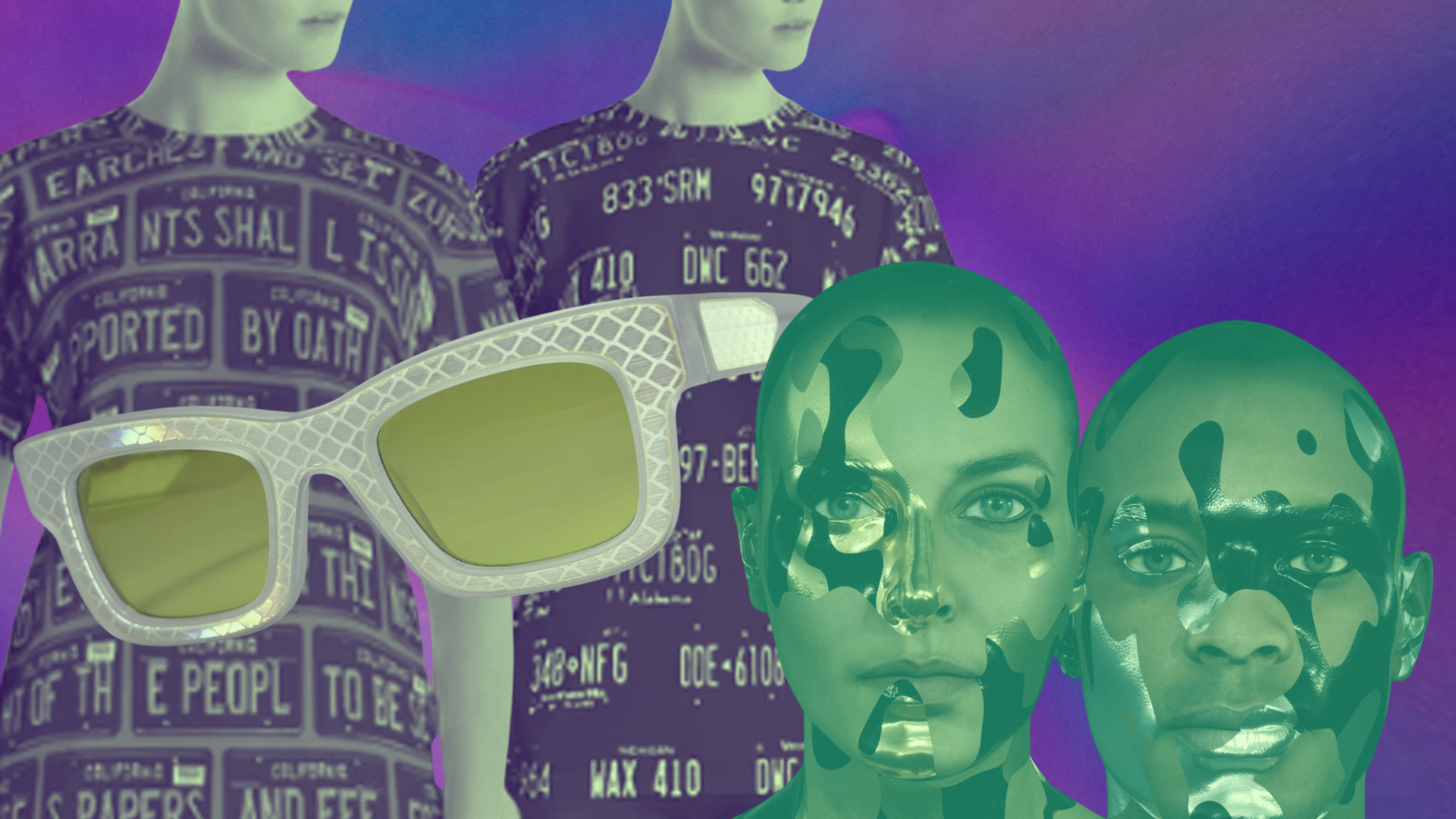
“Despite how anybody may try to discourage you, covering your face with a face mask is still very effective,” technologist and fashion designer Kate Rose told me. In 2019, Rose created Adversarial Fashion, a line of clothing that’s covered in fake license plates, meant to pollute the data collected by automatic license plate readers.
“But the question that you had, and everyone has, is, can you beat face recognition? And the answer is yes, and the easiest way is with a Covid mask,” Harvey said. “You see ICE operatives wearing face coverings and sunglasses. At some point there’s not enough information to do face recognition.”
Every system is different and every scenario is contextual, but adding a few common items to your kit can reduce the likelihood that enough of your biometrics are obscured to get your biometric matching score down. Big sunglasses, covering your chin and mouth, and wearing a baseball cap or brimmed hat that obscures your features from cameras placed above can all bring that score down. “It’s kind of almost a linear relationship between how much of your face you hide and your score in that way. It’s quite simple,” Harvey said. But the problem is, you never know what your score is, so you’re going out blindly, not knowing if your Jackie Onassis sunglasses are going to cover enough of your face, or if you have to get an extra long turtleneck or something to wear.”
If you want to really step up your sunglasses game, you could get a pair of glasses that block infrared wavelengths from cameras, like the ones in newer iPhones that use FaceID. The creator of infrared-blocking glasses line Reflectacles, who asked to go by Skitch, told me he sees the anti-surveillance “fashion” market becoming more mainstream with companies like Zenni selling glasses that block some types of facial recognition joining the trend 10 years after he launched his own IR-blocking specs. “I see the landscape of anti-surveillance wearables becoming popularized and monetized,” Skitch said. “If people with money find out that an area of business exists without them making money, they will certainly find a way to gather that market, that money.”
Reflectacles don’t look like normal glasses—they look like something from The Matrix, with a green tint and cyberpunk shapes—but sometimes signaling that you care about privacy to other people is part of the point.
Rose has been organizing community meetings in her small Pacific Northwest town to talk about the influx of Flock cameras on their streets, and she said she’s found that people across all walks of life and political leanings care deeply about privacy. “It can feel kind of futile, but I think it’s important to remember that it’s also about art and fashion, right? It’s about helping people with their mental abstraction of how [surveillance] works. And to have a tiny little protest that says, well, you have to store all my garbage, analyze it… People get a chance to talk to each other about what’s important to them, and it actually helps people to understand something that’s often kind of techy and abstract about how a piece of prevalent surveillance tech works.” If a license plate camera database can be foiled by a t-shirt, maybe we should think twice about putting a camera on every corner.
“I like the definition of privacy from the Cypherpunk Manifesto: ‘Privacy is the power to selectively reveal yourself,’” Harvey said, referring to technologist and cryptographer Eric Hughes’ 1993 call for encrypted information systems. “By allowing other people to collect, watch or monitor you… It’s a power dynamic that puts you on the losing end. It’s really about power and individual agency, but there’s also a destructive political and democratic component to allowing these mass surveillance systems to grow even larger.”