
Scientists with the U.S. military have revived microbes frozen in Alaskan permafrost that dates back nearly 40,000 years—leading to the discovery of 26 new species—as part of an effort to pioneer technologies to help the military endure extremely cold environments, according to a new release from the U.S. Army Engineer Research and Development Center (ERDC).
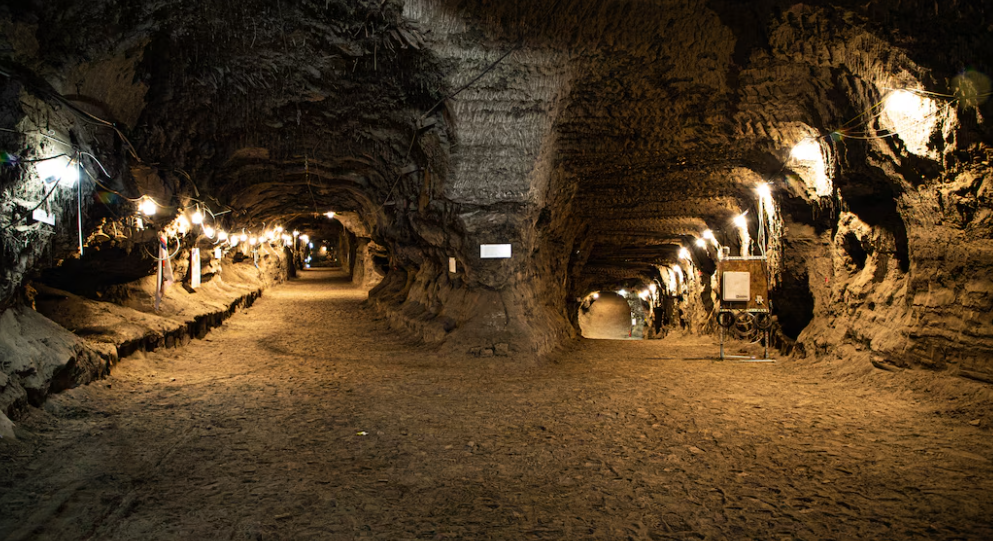
Researchers with ERDC’s Cold Regions Research and Engineering Laboratory (CRREL) discovered the novel microbes in its Permafrost Tunnel Research Facility in Fox, Alaska. Some of these microbes were frozen into the ice 38,000 years ago, a time when Neanderthals still walked Earth, though the samples contain species from many different eras across tens of thousands of years.
“Microbes are the best chemists,” said Robyn Barbato, senior research microbiologist and leader of CRREL’s soil microbiology team, in a call with 404 Media, noting that the permafrost cores are cold and extremely salty.
“We purposefully thought of permafrost and terrestrial ice as a great habitat to think about ice and to discover ice modulation properties,” she added. “If we can learn what they’re doing, how they’re doing it, then we can take that as a biotechnology and apply it to real world problems out there.”
Digging up ancient lifeforms from permafrost is a busy field, with researchers reviving viruses that have been dormant for nearly 50,000 years in some cases, as well as recently discovering millennia-old bacteria that are resistant to many common antibiotics. But why is the U.S. Army interested? Some of the possible military applications of CRREL’s research include the development of frostbite prevention creams for soldiers working in extreme environments, novel antifreeze formulas, and techniques for de-icing vehicles and other equipment. Microbial research could also lead to new methods for creating stable ice so that, for example, vehicles could pass safely over melted or thawed ground.
“For the military, frostbite is a huge, huge problem when you’re in extreme weather conditions in the Arctic,” Barbato said, noting that cold conditions can also stop batteries and other items from working. “You want to write with a pen—guess what? Your ink froze. You actually have to write with a pencil.”
“When you think about military operations in the cold, you have to think of all these practical things,” she continued. “To link it back to the microorganisms, they’ve developed these properties and materials that we can use to advance the opportunity of staying in the cold longer, and not having as many medical emergencies due to frostbite.”
Barbato and her colleagues at CRREL are funded by a Defense Advanced Research Projects Agency (DARPA)’s project called Ice Control for Cold Environments. Their research demonstrates that “permafrost microorganisms have diverse stress responses and survival adaptations relevant to biotechnology,” according to a study the team published last year in the journal Applied and Industrial Microbiology.
“We have a rich history of doing cold regions research,” Barbato said. “We have technical reports that, for the 60 years that we’ve been around, are still referenced today on how to collect ice cores in the middle of nowhere under freezing conditions. That initial research was just incredible, and is still used today, which is cool. Pun intended.”
Barbato noted that while her team develops technologies for the military, the discoveries are also applicable to civil spheres. In addition to practical technologies such as de-icing or frostbite prevention, these projects are uncovering novel proteins that may lead to biomedical breakthroughs.
“We’re looking at it from a range of biotechnology applications,” Barbato said. “Specific to the DARPA work is we’re now down-selecting 50 of those bacteria and seeing the top performers, and then starting to apply the technology for military use.”
The samples that the team collects contain spores that may have been frozen in stasis for as long as the ice itself, meaning they date back tens of thousands of years. But some of the younger bacteria in the permafrost has managed to remain metabolically active, reproducing slowly over thousands of years, and even consuming other bacteria in the environment.
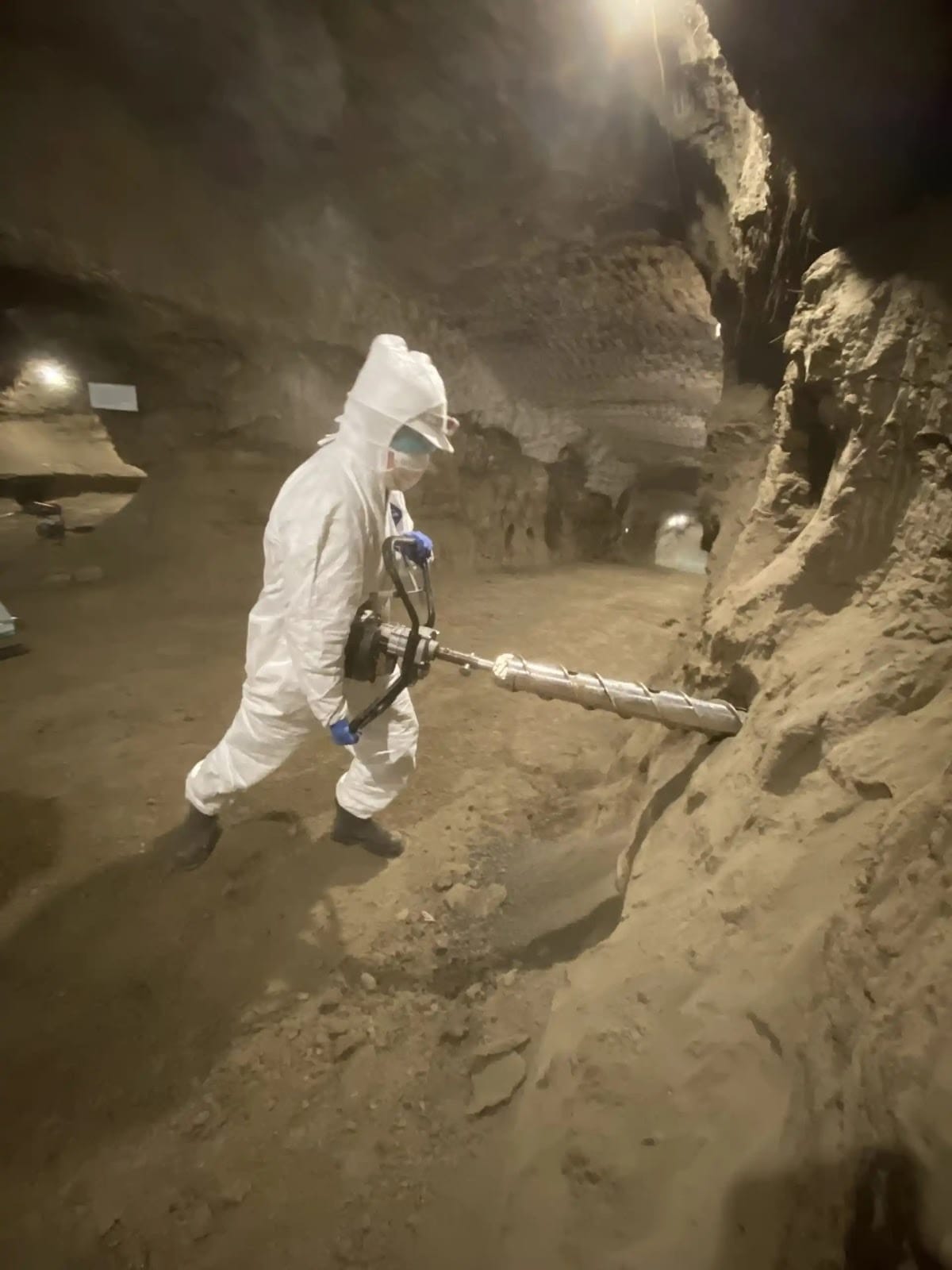
These samples are carefully transported back to the CRREL’s soil microbiology laboratory in Hanover, New Hampshire, where they are revived, cultured, and added to CRREL’s Innovative, Collaborative, Exploratory Cold Regions Organism Library for Discovery in Biotechnology (ICE COLD) library.
“In permafrost, there’s about ten million cells of bacteria in one gram, so there’s a tremendous biodiversity that has been frozen in time,” Barbato concluded.