
Welcome back to the Abstract! Here are the studies this week that were long in the tooth, trapped in the lattice, unearthed in Thailand, and entombed in post-apocalyptic waters.
First, scientists discover that even Neanderthals had to go to the dentist. Then: a nuke-born crystal, a 60,000-pound herbivore, and life after the death of most species on the planet.
As always, for more of my work, check out my book First Contact: The Story of Our Obsession with Aliens or subscribe to my personal newsletter the BeX Files.
A trip to the Neanderthal dentist
Neanderthals performed dental interventions at least 59,000 years ago, pushing the timeline of dentistry back by tens of thousands of years, according to a study about a molar from Chagyrskaya Cave in southwestern Siberia.
Early humans used rudimentary dental tools, like toothpicks, for well over a million years. But scientists have now identified evidence that Neanderthals used drills to treat cavities at the Siberian site, performing an Ice Age version of a root canal. Previously, the oldest tooth that showed signs of a dental checkupt belonged to “Villabruna,” a prehistoric human male who lived in Italy 14,000 years ago.
The remnants of the Neanderthal tooth adds to a growing body of research that has overturned the stereotype of Neanderthals as cognitively inferior to Homo sapiens and hints at “cognitive convergence” between the two species, according to the study.
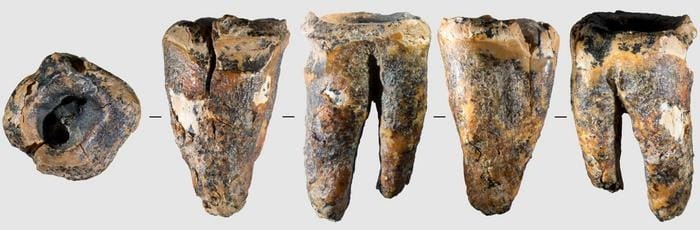
The Chagyrskaya Cave tooth shows “evidence of two distinct types of manipulations requiring different tools, in addition to the drilling/rotating technique, necessitating complex finger movements,” said researchers led by Alisa Zubova from the Peter the Great Museum of Anthropology and Ethnography (Kunstkamera).
The study suggests that Neanderthals at this site “possessed the cognitive capacity to intuit the source of pain, comprehend the feasibility of its elimination, and deliberately select the most efficacious dental intervention,” the team added. “The technical proficiency required for this procedure…reflects a capacity for causal reasoning, anticipatory planning, and volitional endurance, contradicting earlier assumptions regarding Neanderthal behavioral limitations.”
It’s not clear if this Neanderthal patient got a complimentary toothpick at the end of the visit, but at the very least, they received some temporary relief from a bad toothache.
In other news…
Now I have become Death, maker of crystals
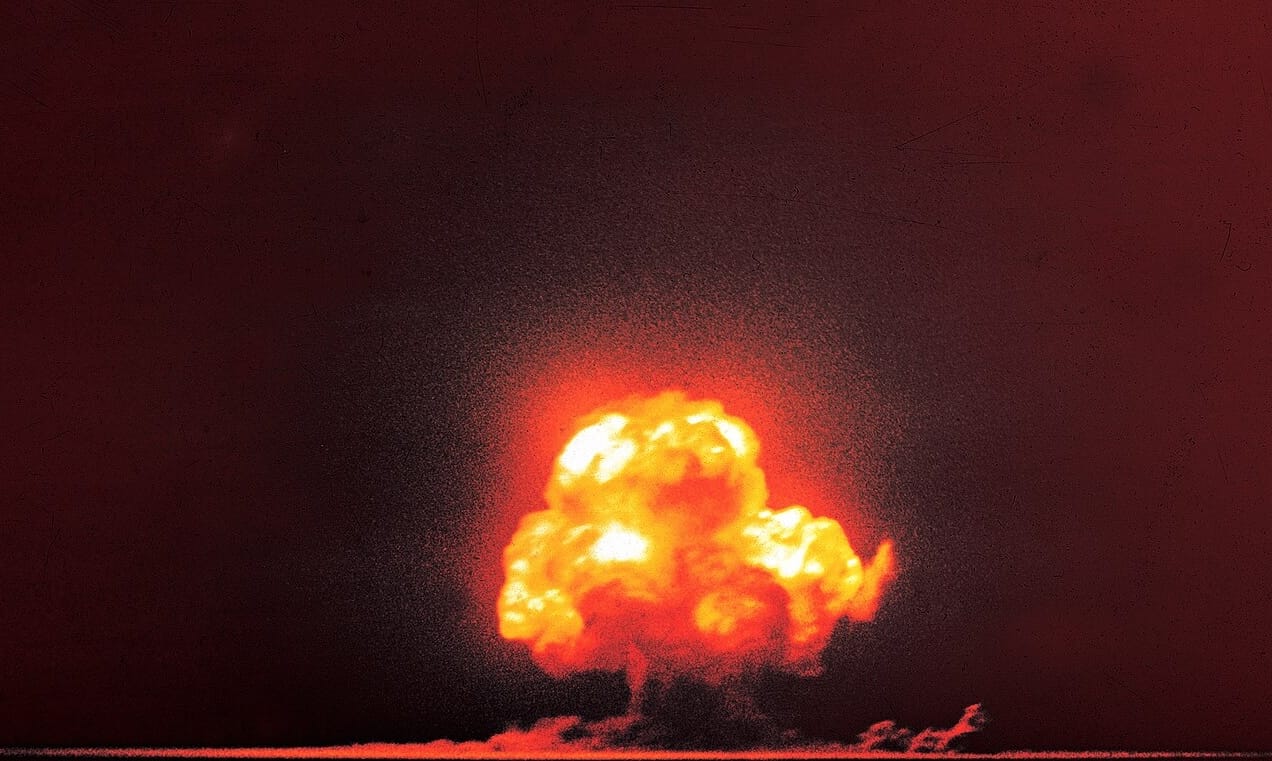
Scientists have discovered a weird new type of crystal in the ashes of the Trinity test, the first detonation of a nuclear bomb, which took place in the early morning of July 16, 1945, in New Mexico.
Trinity’s “gadget” unleashed a powerful fireball that vaporized its test tower and transformed the desert sand into a glassy residue called trinitite. For decades, researchers have found novel and bizarre compounds in the fallout. A new study now reports the first known instance of a clathrate structure—a crystal lattice that can trap “guest” molecules inside its cagelike scaffolding—in red trinitite.
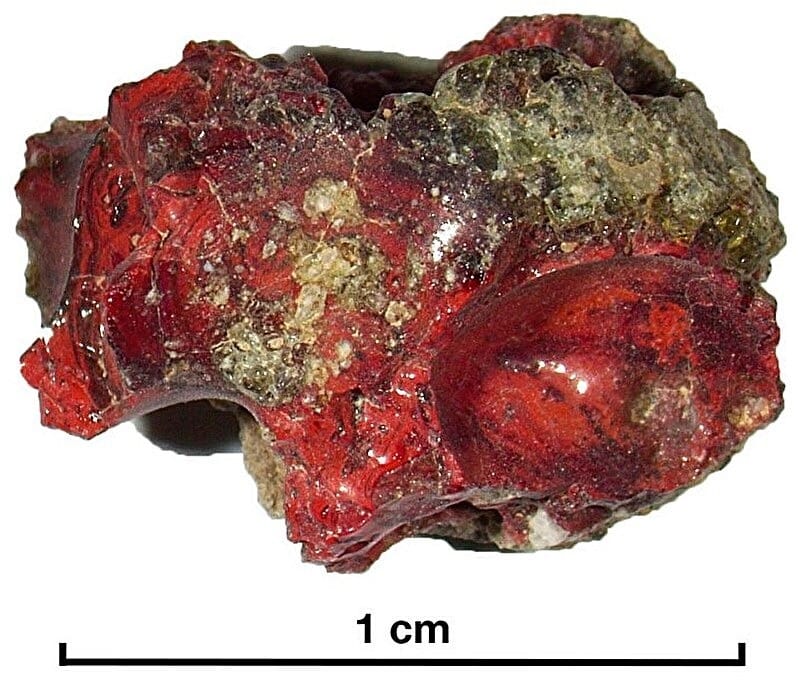
“The discovery of this phase represents the first crystallographically confirmed identification of a clathrate structure among the solid-state products of a nuclear explosion,” said researchers led by Luca Bindi of the University of Florence.
“This work underscores how rare, high-energy events—such as nuclear detonations, lightning strikes, and hypervelocity impacts—serve as natural laboratories for producing unexpected crystalline matter,” the team added.
In addition to being one of the most pivotal split-seconds in history, the Trinity test spun sand into exotic materials that are still generating discoveries more than 80 years later.
A huge new Thai-nosaur
Meet the largest dinosaur ever found in Southeast Asia: Nagatitan chaiyaphumensis, a hulking sauropod that lived more than 100 million years ago in what is now Thailand.
Weighing in at an estimated 60,000 pounds and measuring nearly 90 feet from head to tail-tip, this massive herbivore belonged to the titanosaur family, the largest animals ever to walk on land.
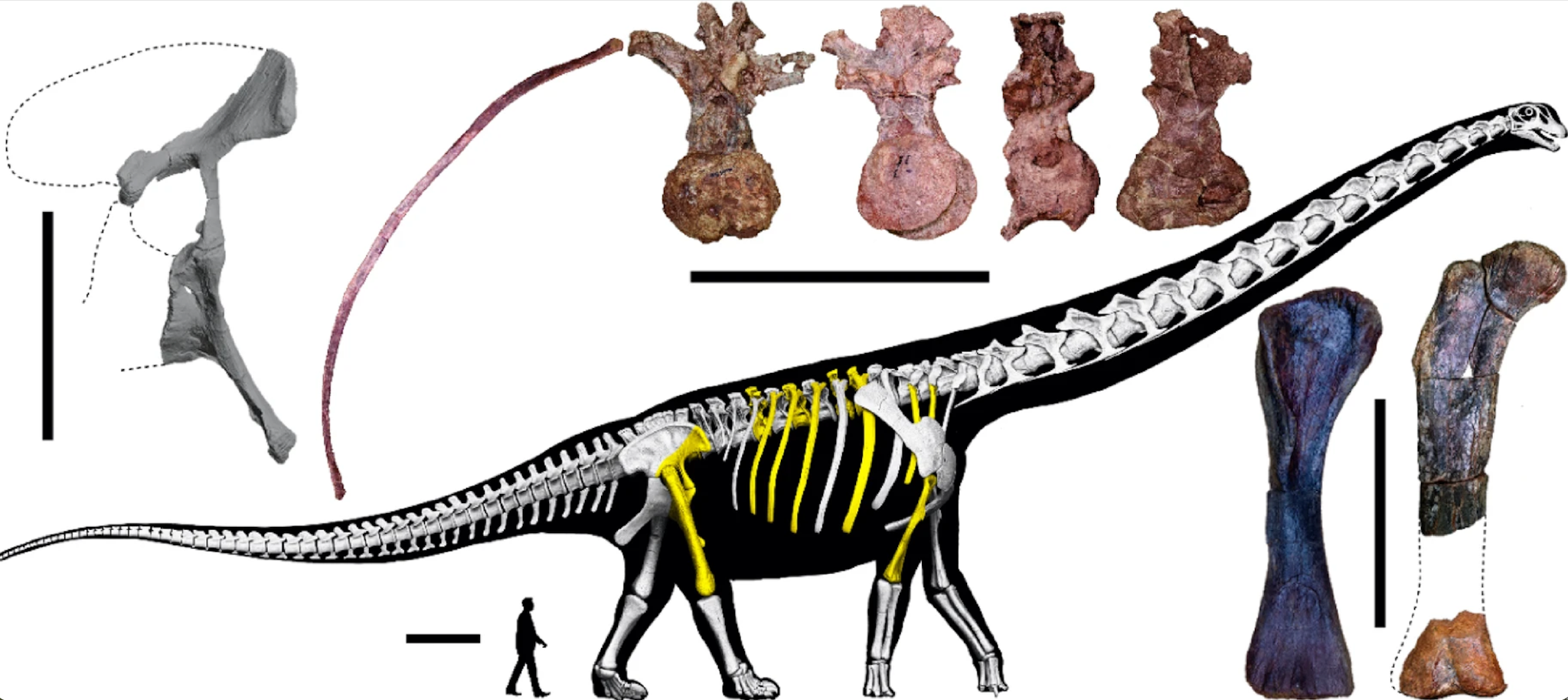
“We estimate a body mass of 25–28 tonnes for Nagatitan, and suggest it was part of a broader middle Cretaceous body size increase in Asian titanosauriforms, facilitated by rising temperatures and expanded suitable habitat,” said researchers co-led by Thitiwoot Sethapanichsakul of University College London and Sasa-On Khansubha of Sirindhorn Museum in Thailand.
“The discovery of Nagatitan expands the known diversity of Southeast Asian sauropods and improves our understanding of titanosauriform biogeography within the region,” the team added.
While it’s mind-boggling to imagine a 90-foot-long, 25-tonne animal casually ambling around, Nagatitan is only mid-sized for a titanosaur. The biggest behemoths in this family may have exceeded 120 feet in length and boasted 130,000 pounds of fully plant-powered body mass.
With that said, the all-time heavyweight champion of the animal kingdom is our own contemporary, the blue whale, which tips the scales at an astonishing 400,000 pounds. Have you ever felt so puny in your life?
Life goes on, re-gar-dless
The last titanosaurs were wiped out by the asteroid that brought the age of dinosaurs to a sudden and brutal end 66 million years ago, killing off about two-thirds of all species on Earth. But though the space rock eradicated the land giants, some animals managed to pull through, including a large fish that lived within 2,000 years of the impact.
Scientists led by Jacob Wilson of the Denver Museum of Nature & Science described the anatomy of a gar and weighed in on its possible taxonomy, building on the initial 2022 study that first reported the specimen. Measuring about five feet in length, this gar inhabited a post-apocalyptic world that is preserved within the Fort Union Formation of North Dakota.
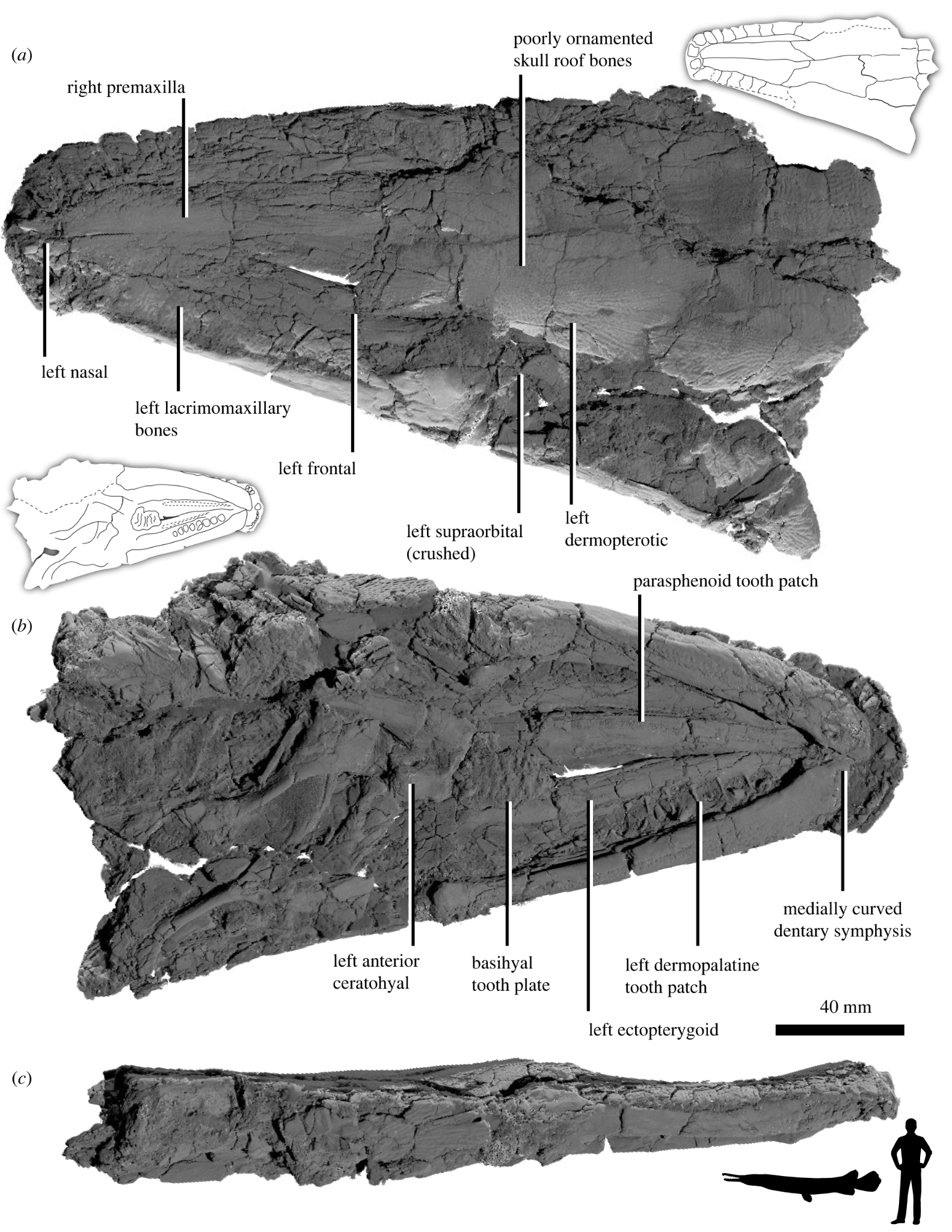
The specimen “is notable both for its size (more than 1 meter) and its precise stratigraphic placement 18 centimeters above the Cretaceous/Paleogene (K/Pg) boundary clay,” the team said. “Our conclusions support the inference that gars were prominent members of freshwater ecosystems and, in turn, freshwater ecosystems were capable of supporting large-bodied predators within ∼2000 years after the K/Pg extinction.”
This gar hatched into an eerily empty ecosphere, mere centuries after a planetary nightmare, yet it still grew into a fisherman’s dream catch. It’s a testament to the resilience of life on Earth, which could not be fully stomped out even by a direct cosmic punch to the face.
Thanks for reading! See you next week.